Why Your Dance Studio's Location Determines Success
Julia Wagner ·
Listen to this article~4 min
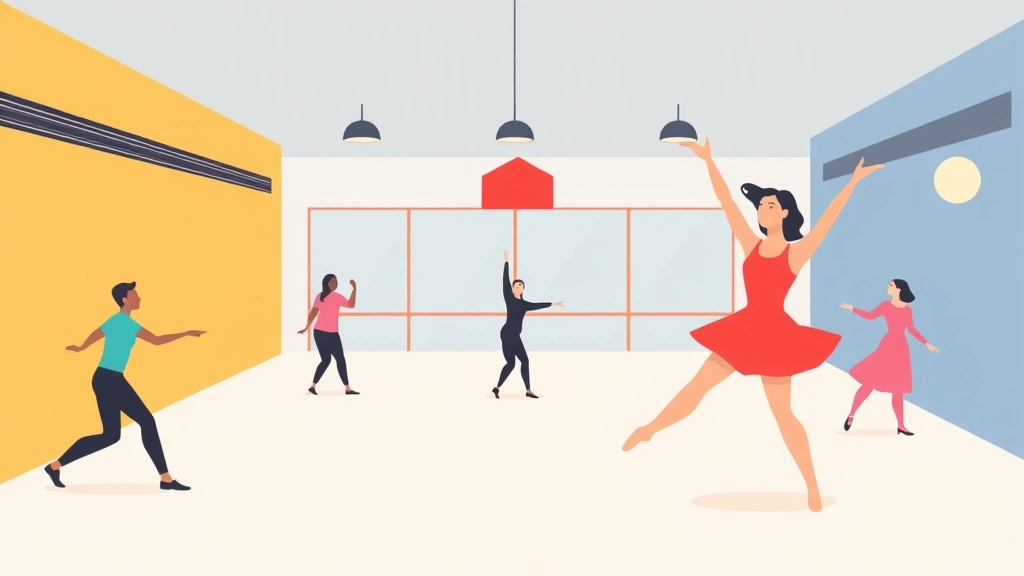
Your dance studio's location impacts everything from enrollment to revenue. Learn why accessibility, visibility, and neighborhood fit matter more than you think, and how to choose or maximize your space for success.
You know that feeling when you walk into a space and it just feels right? The energy flows, the light hits the mirrors perfectly, and you can already imagine dancers moving through it. That's the magic of location for a dance studio. It's not just an address—it's the foundation of your entire business.
Think about it. Your location influences everything. Who walks through your door, how often they come, and whether they stick around for the long haul. Getting this right is more important than any marketing campaign or fancy flooring.
### The Three Real Estate Truths for Dance Studios
You've probably heard the old saying: location, location, location. Well, for dance studios, this breaks down into three specific factors that can make or break your business.
First, accessibility matters more than you might think. If parents have to fight through 30 minutes of traffic after school to get their kids to your 4 PM ballet class, they're going to find somewhere closer. I've seen studios with incredible teachers struggle because they were tucked away in hard-to-reach industrial parks.
Second, visibility creates opportunity. A storefront on a main street gets seen by thousands of cars every day. That's free advertising. A basement studio? Not so much. People need to know you exist before they can sign up.
Third, the neighborhood vibe should match your studio's personality. A competitive hip-hop studio might thrive in an urban arts district, while a classical ballet school might fit better in a suburban community center.
### What Dancers and Parents Actually Look For
Let's get practical. When someone's choosing a dance studio, they're considering:
- Parking availability (and whether it's free or costs $5 per visit)
- Distance from home or school (most won't travel more than 5 miles)
- Safety of the surrounding area, especially for evening classes
- Proximity to other activities (grocery stores, coffee shops for waiting parents)
- Public transportation options for older students
I once consulted with a studio owner who was confused why her adult classes weren't filling up. Turns out, her location had no street parking after 6 PM, and the nearest parking garage charged $12 for two hours. Once we did the math, students were paying more for parking than for the class itself.
### The Financial Reality of Square Footage
Here's where things get real. Dance space isn't cheap. In most U.S. cities, you're looking at $15 to $30 per square foot annually for retail space. A decent studio needs at least 1,000 square feet for one classroom, plus waiting areas and bathrooms.
That means your location decision directly impacts:
- Your monthly rent (often $2,000 to $4,000+)
- How many classes you can run simultaneously
- What you need to charge per class to break even
- Whether you can afford sprung floors (which cost $8,000 to $15,000 to install)
As one studio owner told me: "I chose the cheaper location to save money, but then I spent twice as much on marketing trying to get people to find me."
### Making Your Location Work For You
Even if you're locked into a less-than-perfect spot, there are ways to maximize what you've got. Strategic scheduling can help—offer back-to-back classes so parents make one trip for multiple siblings. Create a comfortable waiting area with Wi-Fi so the commute feels worthwhile. Partner with nearby businesses for cross-promotion.
Remember, your location isn't just where you are—it's part of your studio's identity. It tells a story before anyone even sees a plié. Choose wisely, work with what you have, and always keep your dancers' experience at the center of every decision.
Because at the end of the day, the best choreography in the world won't matter if no one can get to the studio to see it.