Why Tech Nerds Are Embracing 19th Century Ballroom Dance
Sarah Jenkins ·
Listen to this article~4 min
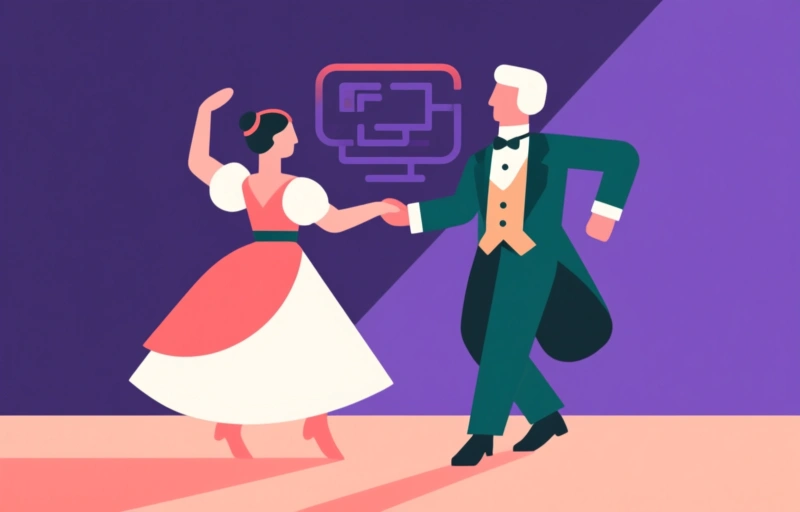
Silicon Valley tech professionals are finding unexpected joy and connection in 19th century ballroom dance. Discover why this historical trend is resonating in the modern tech world and what it means for dance studios.
You know, it's funny how trends circle back. In the heart of Silicon Valley, where everyone's looking forward to the next big thing, there's a growing crowd looking back—way back. We're talking about the elegant world of 19th century ballroom dance, and it's not who you might expect leading the charge.
It's the self-proclaimed 'nerds' of the Bay Area. The programmers, engineers, and tech wizards who spend their days in front of screens are spending their evenings learning the waltz, the polka, and the quadrille. And honestly? It makes perfect sense when you think about it.
### The Unexpected Appeal of Historical Dance
So why is this happening now? Well, after years of virtual meetings and digital everything, people are craving real, tangible connection. There's something profoundly human about looking someone in the eye as you move together through space. Historical ballroom dance offers structure in a world that often feels chaotic—there are clear steps, defined roles, and beautiful patterns to follow.
It's like coding, but with your body instead of a keyboard. Both require precision, attention to detail, and creative problem-solving. The dance floor just happens to be more romantic than a computer terminal.
### More Than Just Fancy Footwork
This isn't just about learning steps. It's about entering a different world entirely. Participants often embrace the full experience:
- Elaborate period costumes that transform ordinary evenings into something magical
- The social etiquette of another era, where conversation was an art form
- Live music that fills spaces in a way streaming never can
- A break from constant digital notifications and screen time
One regular participant put it beautifully: "For three hours every week, I'm not a software engineer. I'm a character in a Jane Austen novel, and my only task is to be present in the moment."
### Building Community Through Movement
What's really striking is how these dances create instant community. You can't be on your phone when you're trying not to step on someone's toes. You have to actually talk to people, make eye contact, and work together. In an area known for innovation but sometimes criticized for social isolation, these dances are building bridges.
They're also wonderfully inclusive. The tech world can be competitive, but on the dance floor, everyone starts as a beginner. There's a shared vulnerability in learning something new that breaks down barriers faster than any team-building exercise ever could.
### The Practical Benefits for Dance Professionals
If you run a studio or teach dance, there's opportunity here. Historical dance appeals to a demographic that might not have considered formal dance training before. They're often detail-oriented learners who appreciate the history and technique behind each movement.
Consider offering:
- Introductory workshops focused on one specific dance
- Costume rental or guidance for those new to period attire
- Social events that combine instruction with practice
- Partnerships with local historical societies or museums
### Why This Trend Matters
At its heart, this movement speaks to something deeper than just a hobby. It's about balancing our forward-looking tech culture with appreciation for traditions that have stood the test of time. It's about finding human connection in an increasingly digital world. And honestly? It's just plain fun.
There's joy in mastering something completely different from your day job. There's beauty in costumes that swish as you turn. There's connection in hands that guide rather than type. Maybe we could all use a little more of that 19th century elegance in our 21st century lives.
So if you see flyers for historical dance classes in the Bay Area, don't be surprised if the room is full of people who usually speak in code. They're just finding another language—one spoken with their feet, their hands, and their hearts.