When Dancers Try to Sing: A Crossover Journey
Julia Wagner ·
Listen to this article~4 min

Exploring what happens when dancers step out of their comfort zone to sing. From breath control to mental shifts, discover the crossover journey that makes better performers.
You know that feeling when you're in your element? For dancers, it's the studio floor. The music starts, your body knows what to do, and everything just flows. But what happens when you step out of that comfort zone and try to use your voice instead of your feet? Let's talk about the crossover journey from dancer to singer.
It's more common than you'd think. Many dancers feel the pull to express themselves vocally, whether for a musical theater audition, to expand their artistic range, or just for the sheer joy of trying something new. The transition isn't always smooth, but it's always revealing.
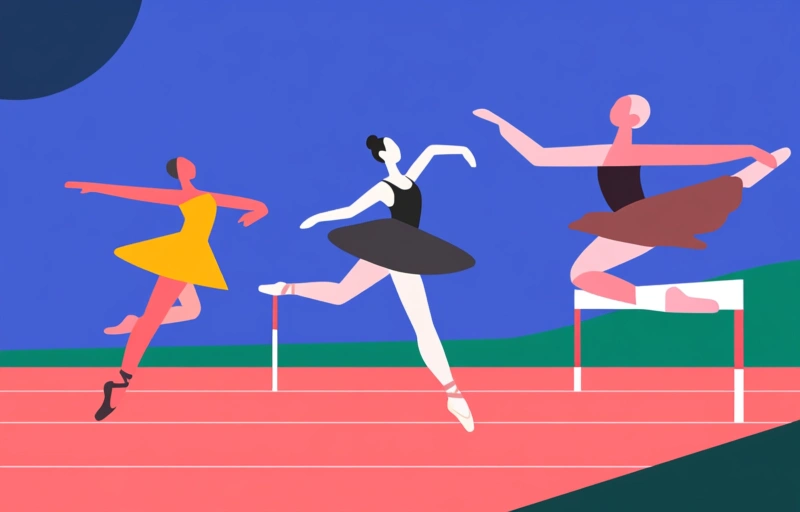
### The First Hurdle: Breath Control
Here's where things get interesting. Dancers are masters of breath control for movement. Holding a plank for 60 seconds? No problem. But singing requires a completely different kind of breath management. It's not about containment; it's about sustained release.
I remember my first vocal lesson after years of dance training. The instructor told me to support a note, and I instinctively engaged my core like I was preparing for a grand jeté. The result? A tight, strained sound that cracked halfway through. It took weeks to unlearn that muscular tension and discover the fluid breath support singing actually requires.
### Finding Your Voice (Literally)
Dancers are often hyper-aware of their bodies in space. We know if our elbow is two inches out of alignment. That bodily awareness doesn't automatically translate to vocal awareness. You can't see your vocal cords. You can't adjust them by looking in a mirror.
- You have to develop new internal sensors
- You learn to feel resonance in different parts of your body
- You discover that relaxation is as important as control
- You realize that perfectionism looks different here
It's a humbling process. That dancer's discipline becomes both your greatest asset and your biggest obstacle.
### The Mental Shift
As one vocal coach told me, "Dancers are used to nailing choreography. Singing isn't about nailing; it's about floating." That shift from precision to expression changes everything. You're not hitting marks on a stage; you're riding waves of sound.
This doesn't mean technique goes out the window. Far from it. But the relationship with technique changes. In dance, technique often feels like the foundation. In singing, technique should become invisible—the scaffold you build so the emotion can shine through.
### Why Every Dancer Should Try It
Even if you never perform a solo, exploring your voice makes you a better performer. You understand phrasing differently. You connect with music on another level. You appreciate what your singing colleagues go through. That empathy alone is worth the awkward first attempts.
Most importantly, you rediscover what it means to be a beginner. That vulnerable, excited, slightly terrified feeling? It keeps you growing. It reminds you why you fell in love with performing in the first place.
So if you've been thinking about trying a vocal class, go for it. Your dance training gives you discipline, body awareness, and musicality. Those are incredible gifts to bring to the vocal studio. The rest? Well, that's the adventure. You might surprise yourself with what comes out when you stop moving and start singing.