Trinity Irish Dance Company Lights Up The Joyce Theater
Julia Wagner ·
Listen to this article~4 min
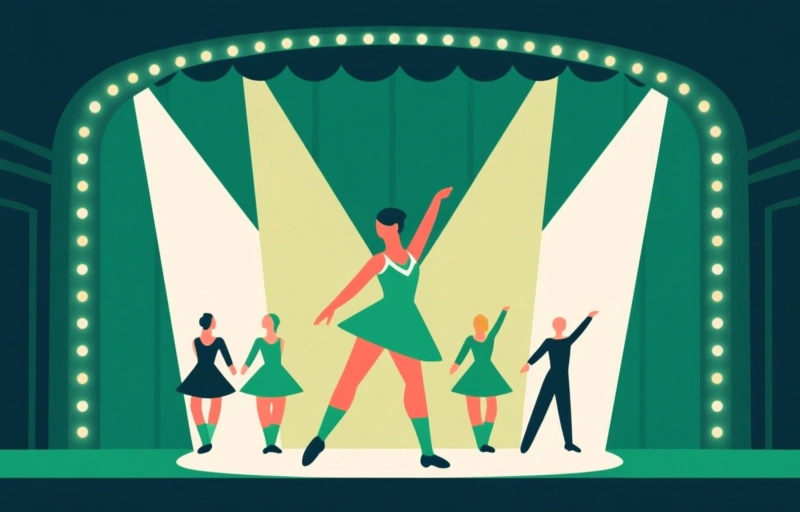
The Trinity Irish Dance Company's electrifying performance at NYC's Joyce Theater redefined tradition with contemporary flair. A must-see case study in artistic evolution for dance professionals.
If you've ever wondered what happens when centuries of tradition meet contemporary innovation, the Trinity Irish Dance Company's recent performance at The Joyce Theater in New York City provided a breathtaking answer. It wasn't just a show—it was a conversation between the old and the new, a physical dialogue that left the audience buzzing with energy long after the final curtain call.
Let's talk about that energy for a moment. You could feel it the moment you walked in. The Joyce, with its intimate 472-seat auditorium, creates a connection you just don't get in larger venues. Every rapid-fire tap, every synchronized leap from the 20-member company resonated through the space. It felt personal, like they were dancing just for you.
### The Evolution of a Tradition
What struck me most was how the company honored its roots while boldly stepping forward. The program seamlessly wove together pieces that showcased the rigorous, lightning-fast footwork Irish dance is famous for, alongside more contemporary, expressive choreography that used the entire body as a storytelling instrument. It was a masterclass in artistic evolution.
They took the familiar—the upright posture, the arms held stiffly at the sides—and infused it with a new fluidity. Dancers would transition from a complex, percussive sequence into a sweeping, lyrical phrase that seemed to defy gravity. It was a reminder that tradition isn't a cage; it's a foundation you can build incredible new structures upon.

### Highlights That Stole the Show
A few moments are still etched in my mind. One piece used the stage in such a clever way, creating patterns and formations that felt both mathematical and deeply human. The precision was military, but the joy was utterly infectious. Another segment featured a smaller ensemble where the interplay between dancers felt like a whispered secret, a private joke of rhythm and motion shared with everyone in the room.
The costuming, too, played a silent but powerful role. Moving away from the classic solo dress, designs incorporated modern lines and textures that caught the light during spins, adding another visual layer to the performance. It was detail-oriented in the best way.
### Why This Matters for Dance Professionals
For studio owners, choreographers, and teachers watching, the takeaway was profound. Here's what we can learn:
- **Technical Mastery as a Springboard:** The company's flawless technique wasn't the end goal—it was the vocabulary they used to say something new. It proves that drilling fundamentals gives dancers the freedom to truly create.
- **Audience Connection is Key:** Performing in a venue like The Joyce emphasizes connection. It's a good reminder for our own recitals and shows: sometimes, a more intimate setting creates a more powerful experience than a cavernous hall.
One of the artistic directors was quoted in the program notes saying something that really stuck with me: *"We are not just keepers of a flame; we are the ones adding new fuel to the fire."* That philosophy was alive in every step.
### The Lasting Impression
Walking out into the New York night, I wasn't just entertained; I was inspired. The Trinity Irish Dance Company demonstrated that cultural art forms can thrive without being frozen in time. They can grow, adapt, and surprise us, all while paying deep respect to the path that brought them here.
For anyone involved in dance—whether you run a studio, teach classes, or create choreography—this performance was a powerful case study in relevance. It showed that our work is never done. There's always a new step to learn, a new idea to explore, and a new way to connect the dots between where we've been and where we're going next. That's a lesson worth taking back to the studio on Monday morning.