Strength and Grace: Inside The Royal Ballet School
Julia Wagner ·
Listen to this article~5 min
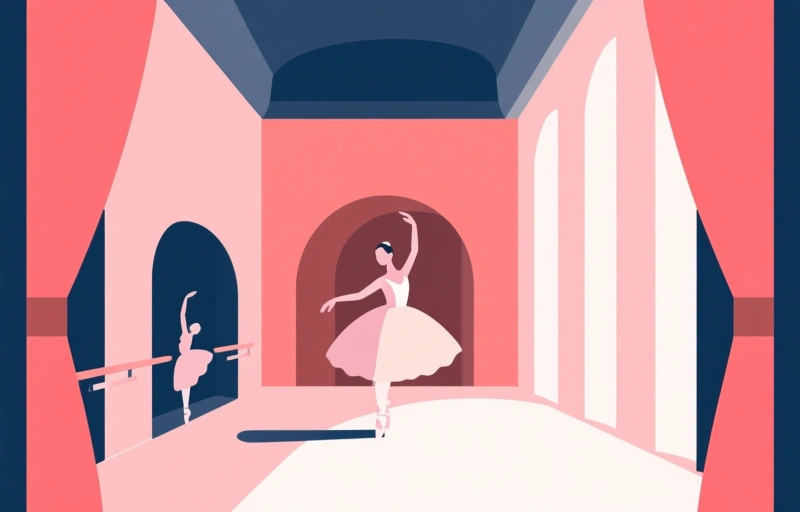
Discover how The Royal Ballet School masters the balance of strength and grace in elite ballet training. Learn about their holistic approach that builds world-class dancers through rigorous technique and artistic development.
You know that feeling when you watch a truly breathtaking ballet performance? The dancers seem to float, their movements effortless and weightless. But here's the thing I've learned after years in the dance world—that apparent ease is built on an incredible foundation of strength. It's the perfect marriage of power and poetry. Today, I want to pull back the curtain on one of the most prestigious institutions that masters this balance: The Royal Ballet School.
We're not just talking about a dance academy here. This is where raw talent meets rigorous training, where young artists transform into world-class performers. It's a process that demands everything—physically, mentally, artistically. And honestly, it's absolutely fascinating to understand what really goes into creating those magical moments on stage.
### The Foundation of Ballet Excellence
Let's start with what makes The Royal Ballet School so special. Think of it as the Harvard of ballet schools, but with more pointe shoes and fewer lecture halls. The training methodology here has been refined over generations. Students typically begin their serious training around age 11, though some enter even younger through the school's junior associate program.
What's really striking is the holistic approach. Yes, they spend countless hours in the studio—we're talking 6 to 8 hours daily for older students. But it's not just about repeating steps until you get them right. The curriculum carefully balances technique classes with artistic development, musicality, anatomy, and even nutrition education. They understand that a dancer is an entire instrument, not just a pair of legs.
### Building the Dancer's Body
Here's where the 'strength' part really comes into play. Ballet requires a specific kind of physical conditioning that most people never see. Those beautiful extensions? They're supported by core muscles that could rival any athlete's. Those multiple turns? They're powered by explosive leg strength and precise spotting technique.
The school's training focuses on developing:
- Exceptional lower body strength for jumps and lifts
- A powerful yet controlled core for balance and line
- Flexible yet resilient joints to prevent injury
- Incredible stamina for full-length performances
One former student described it to me like building a cathedral—every muscle group has to be precisely engineered to support the whole structure. And they're working with bodies that are still growing, which adds another layer of complexity to the training process.
### Cultivating Artistic Grace
Now for the 'grace' component. This is where technique transforms into art. The Royal Ballet School places enormous emphasis on musicality—how dancers interpret and move with the music. It's not just counting beats; it's about feeling phrases, understanding emotional arcs, and communicating through movement.
Students study ballet history and repertoire extensively. They learn not just how to execute steps, but why those steps exist within different stylistic traditions. A Bournonville jump has a different quality than a Balanchine turn, and understanding those distinctions is crucial. As one teacher put it, 'We're not training technicians. We're training artists who happen to have extraordinary technique.'
### The Reality Behind the Curtain
Let's be real for a moment. This level of training isn't for the faint of heart. The physical demands are immense—students might go through a pair of pointe shoes every week (at about $85-$120 per pair). The mental and emotional intensity matches the physical challenge. These young dancers face constant assessment, fierce competition for roles, and the pressure of performing at an elite level.
But here's what's truly remarkable: The school creates an environment where this pressure becomes productive rather than destructive. There's a strong emphasis on resilience, on learning from setbacks, on supporting fellow dancers even while competing with them. It's a delicate balance, and watching it work is genuinely inspiring.
### Why This Matters for Dance Professionals
If you're running a dance studio or teaching the next generation of dancers, there are valuable lessons here. The integration of strength training with artistic development. The careful progression of technical skills. The creation of a culture that balances high standards with genuine support.
You don't need The Royal Ballet School's resources to implement some of these principles. Start by asking: Are we building strong, resilient dancers alongside teaching them steps? Are we helping them understand the 'why' behind the technique? Are we creating an environment where artistic growth can flourish?
At the end of the day, what makes The Royal Ballet School extraordinary isn't just the famous alumni or the prestigious performances. It's their unwavering commitment to that beautiful paradox at the heart of ballet: incredible strength creating the illusion of effortless grace. And honestly, isn't that what we're all trying to achieve in our own studios, in our own way?