Sol Invictus Review: Hervé Koubi's Captivating Dance…
Sarah Jenkins ·
Listen to this article~4 min
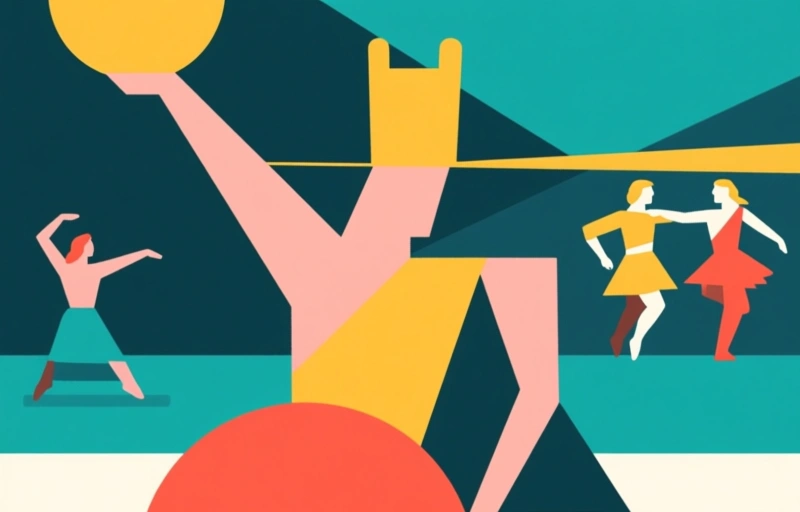
A deep dive into Hervé Koubi's powerful 'Sol Invictus,' exploring its choreographic brilliance and what dance professionals can learn from this masterful production about light, strength, and artistic vision.
Let's talk about a performance that doesn't just move across the stage—it moves you. Compagnie Hervé Koubi's 'Sol Invictus' is one of those rare productions that stays with you long after the curtain falls. It's not just dance; it's a conversation between bodies, light, and ancient myth. If you're a choreographer or studio owner looking for inspiration, this review might just spark your next big idea.
We all know that feeling when a piece of art hits you right in the creative center. 'Sol Invictus' does exactly that. Hervé Koubi has crafted something that feels both timeless and urgently modern. The title itself, meaning 'Unconquered Sun,' hints at the elemental power driving this work. It's about light overcoming darkness, strength emerging from struggle—themes every dancer understands in their bones.
### The Choreographic Language of Light and Shadow
Koubi's movement vocabulary here is breathtakingly physical. The dancers don't just perform steps; they embody celestial forces. There's a raw, athletic quality to the choreography that makes you feel the effort and the release. You can see influences from street dance, contemporary techniques, and something almost ritualistic. The way they play with weight and suspension is masterful. One moment they're grounded and powerful, the next they're defying gravity with effortless leaps.
What's particularly striking is the use of space and relationship. The ensemble work isn't about perfect unison—it's about organic connection. Dancers respond to each other's energy like particles in a magnetic field. For anyone teaching group choreography, there's a lesson here about creating cohesion without sacrificing individuality. The formations evolve naturally, never feeling forced or predictable.
### Why This Matters for Dance Professionals
Watching 'Sol Invictus' isn't just entertainment; it's professional development. Here's what stood out to me as particularly relevant for our community:
- **Narrative without literal storytelling**: The piece suggests myth and journey without spelling it out. It trusts the audience's intelligence and the power of abstract movement.
- **Collaborative energy**: You can feel the dancers' deep connection to each other and the material. It's a reminder that the best work happens when everyone in the room is fully invested.
- **Physical risk and reward**: The choreography demands everything from the performers. It celebrates what trained bodies can achieve while maintaining artistic integrity.
There's a quote from an interview with Koubi that keeps coming back to me: 'I am interested in dancers who are thinkers, who question the movement.' That philosophy shines through every moment of 'Sol Invictus.' The performers aren't just executing steps; they're investigating ideas through their bodies.
### Takeaways for Your Own Studio Practice
So what can we, as dance professionals, learn from this? First, that audiences are hungry for work that challenges them. 'Sol Invictus' proves that sophisticated, physically demanding dance can be deeply engaging. Second, that thematic depth matters. Having a strong conceptual foundation gives the movement purpose beyond mere aesthetics.
Finally, it reminds us to think bigger about what dance can be. Koubi blends cultural references, historical motifs, and contemporary movement in ways that feel fresh and necessary. In our own studios, we might ask: How can we help our dancers connect their technique to bigger ideas? How can we create work that speaks to both the body and the mind?
'Sol Invictus' leaves you with more questions than answers—and that's its greatest strength. It invites conversation, interpretation, and emotional response. For choreographers feeling stuck in familiar patterns, this production offers a masterclass in breaking boundaries. The standing ovations aren't just for spectacular dancing; they're for a vision fully realized.
Whether you're planning your next production or simply looking for artistic fuel, this kind of work reminds us why we fell in love with dance in the first place. It's not about steps—it's about speaking a language that goes beyond words.