Russell Maliphant's Landscapes: Three Solos at Sadler's Wells East
Julia Wagner ·
Listen to this article~4 min
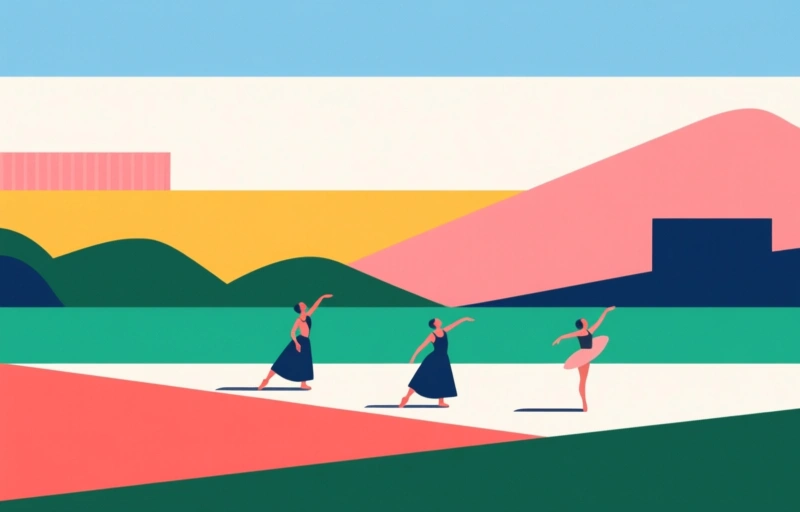
Russell Maliphant's 'Landscapes' features three powerful solos at Sadler's Wells East. This exploration of movement offers key insights for dance professionals on spatial awareness, dynamic range, and artistic intentionality in choreography.
If you're a dance professional, you know that a truly great performance can feel like a masterclass in movement. It's not just about the steps, it's about the story they tell and the space they inhabit. That's exactly what Russell Maliphant's latest work, 'Landscapes,' achieves. This series of three solos, recently presented at Sadler's Wells East, is a powerful exploration of the body in motion.
It features three outstanding dancers, each bringing their own unique energy and technical prowess to the stage. The show isn't just a performance; it's a deep dive into the relationship between dancer, choreography, and environment. For studio owners and choreographers, there's a lot to unpack here about composition and solo work.
### The Power of the Solo Form
Working with a solo dancer is one of the most intimate challenges in choreography. You're stripping everything back to the raw connection between a single body and the audience. Maliphant has always been a master of this, using light and shadow as much as movement. In 'Landscapes,' he pushes this further. Each solo feels like a distinct world, a different emotional and physical terrain for the dancer to navigate.
It makes you think about how you approach solo pieces in your own studio. Are you creating a complete world for that one dancer to inhabit? The focus is so intense that every gesture, every breath, becomes magnified. There's nowhere to hide, and that's where the real artistry shines through.

### Lessons for Dance Studios and Choreographers
Watching work like this isn't just for enjoyment—it's professional development. Here are a few takeaways any dance professional can apply:
- **Spatial Awareness:** Notice how the dancers use the entire stage. They aren't just moving in the center; they explore its edges, its depth, and its vertical space. This is a great reminder to teach students to own the whole room, not just their spot.
- **Dynamic Range:** The solos move from moments of incredible stillness to explosive bursts of energy. Contrast is everything. It keeps the audience engaged and highlights the dancer's control. Think about how you can build more dynamic contrast into your own choreography.
- **Intentionality:** Every movement in 'Landscapes' feels purposeful. There's no filler. This is a crucial lesson for dancers of all levels: every step should have a reason, an intention behind it. It transforms technique into storytelling.
As one critic aptly noted, 'Maliphant doesn't just choreograph steps; he sculpts with light and bodies, creating living architecture on stage.' This idea of dance as architecture is something we can all learn from. It's about structure, form, and the empty spaces in between.
### Bringing It Back to Your Studio
So, how does a show in a major theater relate to your daily work? It's all about inspiration and raising the bar. Exposing your students—and yourself—to high-level professional work expands what they believe is possible. Talk about these performances in class. Break down what made them effective. Was it the musicality? The emotional commitment? The innovative use of props or lighting?
Encourage your dancers to think of themselves not just as performers, but as artists shaping an experience. That shift in mindset can change everything. Whether you're setting a competition solo or a piece for your recital, aim to create a small landscape of its own. Give the dancer a world to live in, even if it's just for three minutes.
Ultimately, work like Russell Maliphant's 'Landscapes' reminds us why we do this. It's about the endless possibilities of the human body and the stories it can tell. It challenges us to think bigger, to be more intentional, and to never stop exploring the art form. That's a lesson worth bringing into every studio, every rehearsal, and every class.