Reclaiming Ballet: Dr. Adesola Akinleye's 'Sycorax's Tempest'
Julia Wagner ·
Listen to this article~4 min
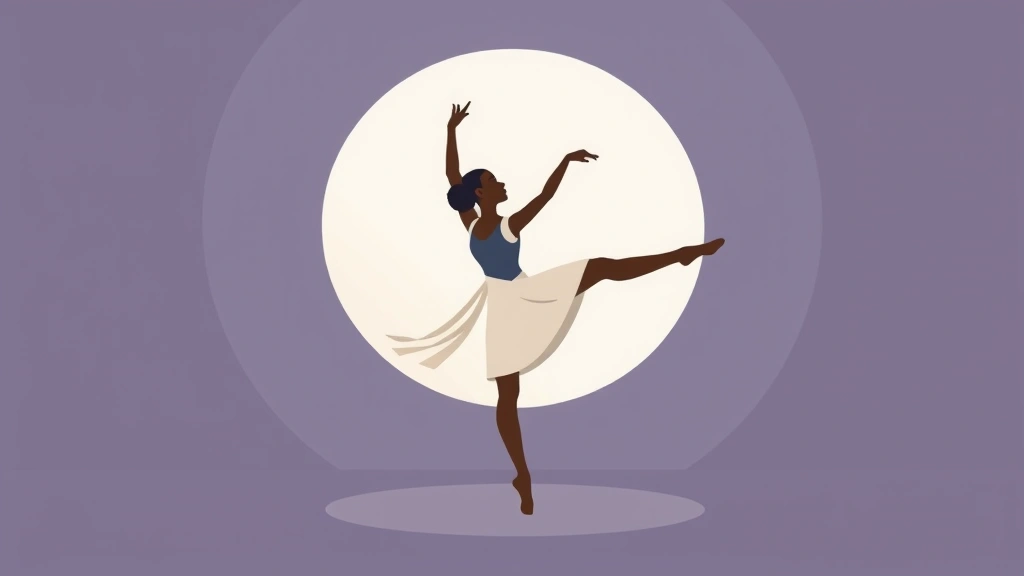
Explore how Dr. Adesola Akinleye's 'Sycorax's Tempest' reclaims ballet, challenging traditions and offering a blueprint for inclusive, innovative dance education in modern studios.
Let's talk about ballet for a second. Not the ballet you might picture first—the tutus, the rigid traditions, the stories we've seen a hundred times. I mean ballet as a living, breathing language. One that can tell new stories and speak with fresh voices.
That's exactly what guest choreographer Dr. Adesola Akinleye is doing with her groundbreaking work, 'Sycorax's Tempest.' Created for a major centenary celebration, this piece isn't just another performance. It's a reclamation. A powerful statement about who gets to define classical dance and what stories it can hold.
### The Vision Behind 'Sycorax's Tempest'
Dr. Akinleye approaches choreography like an archaeologist and a futurist combined. She digs into ballet's deep history, but she's not interested in preserving it under glass. She wants to pull it into the present, to make it resonate with audiences right now. 'Sycorax's Tempest' draws inspiration from Shakespeare's *The Tempest*, but it centers the character of Sycorax—a powerful witch often sidelined in the original narrative.
This shift in perspective is everything. It asks us to look at a familiar tale from a new angle. In doing so, it challenges the very foundations of who is centered in classical storytelling. The movement vocabulary itself becomes a tool for this exploration, blending classical ballet technique with other forms to create something entirely unique.
### Why This Work Matters for Dance Professionals
If you run a studio or teach classes, you know the constant push and pull between tradition and innovation. Students come in wanting to learn the classics, but they also crave relevance. They want to see themselves reflected in the art form. Dr. Akinleye's work provides a brilliant blueprint.
- **It expands the canon:** Introducing works like this shows students that ballet is not a frozen art. It's a dynamic field where new masterpieces are being created.
- **It fosters inclusivity:** By centering marginalized narratives, it makes the studio space more welcoming for a diverse range of bodies and experiences.
- **It sparks critical conversation:** This isn't art you just watch and forget. It makes you think, discuss, and question—a fantastic tool for engaging advanced students.
Think of it this way: teaching only the 19th-century repertoire is like only teaching classic literature without any modern novels. You need both to understand the full, living scope of the form.
### Bringing Reclamation Into Your Own Studio
You don't need a centenary commission to start exploring these ideas. The core concept—reclaiming and recontextualizing—is something you can apply on a smaller scale. Maybe it's about reworking a traditional variation to different music. Perhaps it's about challenging students to create a piece that tells a personal or community story using ballet as the base language.
> "Ballet is a language," one might say, echoing Dr. Akinleye's approach. "And languages evolve. They borrow words, create new slang, and tell new stories. Why should ballet be any different?"
The goal is to move from being mere custodians of tradition to being active participants in the art form's evolution. It's about honoring the technique—the years of training, the discipline, the strength—while freeing the storytelling. That's the real magic. When students see that their voices and their stories have a place within the rigorous structure they're learning, their connection to the work deepens immeasurably.
So, what's the takeaway for us as teachers and studio owners? Dr. Adesola Akinleye's 'Sycorax's Tempest' is more than a performance. It's an invitation. An invitation to look at our syllabi, our recital pieces, and our teaching philosophies with fresh eyes. It asks us how we can honor ballet's incredible legacy while actively making space for the next chapter. Because the future of ballet isn't just about preserving the past. It's about reclaiming it, reshaping it, and ensuring it has a vibrant, relevant, and inclusive life for the next hundred years.