Mastering the Cha Cha: A Dancer's Journey to Rhythm and…
Julia Wagner ·
Listen to this article~5 min
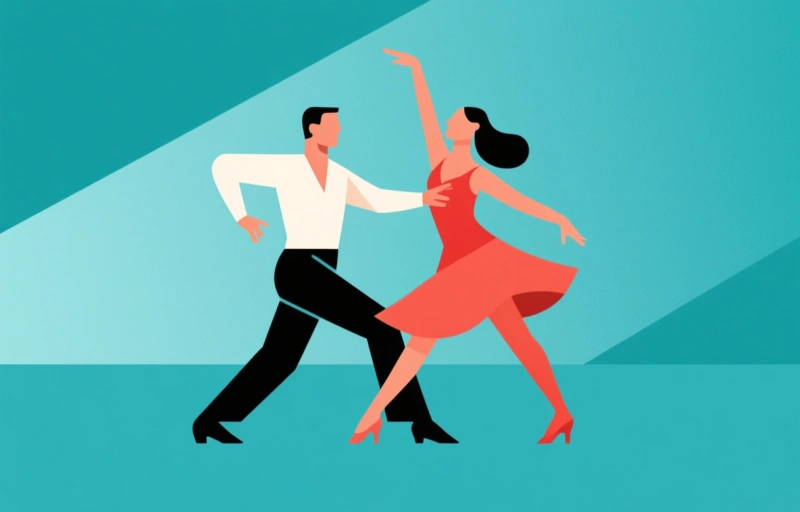
Discover the vibrant world of Cha Cha dancing through a professional's perspective. Learn fundamental techniques, teaching strategies for studio owners, and how to maintain the joy in this rhythmic Latin dance style that combines precision with personality.
You know that feeling when the music starts and your feet just want to move? That's the magic of dance, and today we're diving deep into one of its most vibrant expressions: the Cha Cha. It's more than just steps—it's a conversation between rhythm, body, and soul.
Let's talk about what makes this dance so special. The Cha Cha originated from Cuban rhythms and has evolved into a global sensation you'll find in ballrooms, studios, and even wedding receptions across the United States. Its signature syncopated beat—that 'cha-cha-cha' shuffle—creates an energy that's both playful and precise.
### The Foundation of Cha Cha Movement
Every great dance starts with solid fundamentals. For the Cha Cha, that means mastering three core elements:
- **The rhythm pattern**: It's a quick-quick-slow beat that feels like a heartbeat with extra flair. Count it as 'two-three-cha-cha-cha' and you're already halfway there.
- **Cuban motion**: This hip action isn't just for show—it's the engine that drives the dance forward. Think of it as your body's natural response to the music's pulse.
- **Sharp footwork**: Clean, precise steps create that characteristic staccato effect. Your feet should speak the rhythm as clearly as the music plays it.
I remember teaching a student who struggled with the timing for weeks. Then one day, she stopped counting and just felt the music. Suddenly, everything clicked. That's the moment we're all chasing—when technique meets intuition.
### Building Your Cha Cha Vocabulary
Once you've got the basics down, it's time to expand your movement library. The Cha Cha offers endless possibilities for creativity within its structured framework. Start with simple turns and cross-body leads, then gradually incorporate more complex patterns like rope spins or New Yorkers.
What most dancers don't realize is that the space between steps matters just as much as the steps themselves. Those moments of suspension, those tiny hesitations—that's where personality shines through. As one of my mentors used to say, 'The music tells you when to move, but your heart tells you how.'
### Connecting With Your Partner and Audience
Here's where the real magic happens. The Cha Cha is fundamentally a social dance, which means connection is everything. Whether you're dancing with a partner or performing for an audience, that energy exchange transforms technical movement into meaningful expression.
Focus on these connection points:
- Maintain eye contact—it builds trust and communication
- Match your partner's energy level and style
- Project confidence through your posture and smile
- Listen to the music together rather than just counting
I've seen partnerships where both dancers are technically perfect but feel disconnected. Then I've watched beginners with mediocre technique who radiate joy and connection. Guess which couple everyone remembers? The one that made people feel something.
### Practical Tips for Studio Professionals
If you're teaching the Cha Cha in your studio or choreographing routines, here are some field-tested strategies:
Break down complex patterns into manageable 8-count segments. Students absorb material better when it's served in bite-sized pieces. Use clear, consistent terminology—nothing confuses beginners faster than mixed metaphors. And always, always relate movements to musical cues rather than just counts.
Consider the practical aspects too. A standard dance studio floor should be at least 30 feet by 40 feet for comfortable Cha Cha practice. That gives couples enough space to travel while executing those characteristic sideways movements. The ideal temperature? Most dancers prefer it around 68-72°F—warm enough to keep muscles loose but cool enough to prevent overheating during intense practice sessions.
### The Business of Teaching Dance
Let's get practical for a moment. If you're running a studio, you know that passion needs to meet sustainability. The average group class in the U.S. runs about $15-$25 per person per session, while private lessons can range from $50 to $100 per hour depending on your experience and location.
But here's what they don't teach in dance school: your most valuable asset isn't your technique—it's your ability to communicate it. Students will pay for transformation, not just information. They want to feel progress, to experience breakthroughs, to become part of a community.
### Keeping the Joy Alive
After years in this industry, I've learned one non-negotiable truth: if you're not enjoying the dance, neither will anyone watching you. The Cha Cha should feel like a celebration, not a checklist of technical requirements.
So play with the music. Experiment with different styling. Laugh when you make mistakes—because you will, and that's perfectly okay. The most memorable dancers aren't the ones with perfect technique; they're the ones who make us believe in the joy of movement.
Remember why you started dancing in the first place. That initial spark of excitement when you first heard that distinctive Cha Cha rhythm? Protect that feeling. Nurture it. Share it with every student who walks through your studio doors. Because in the end, we're not just teaching steps—we're passing along a tradition of rhythm, connection, and pure, unadulterated joy.