Leni Wylliams Legacy Preserved in Library of Congress…
Julia Wagner ·
Listen to this article~5 min
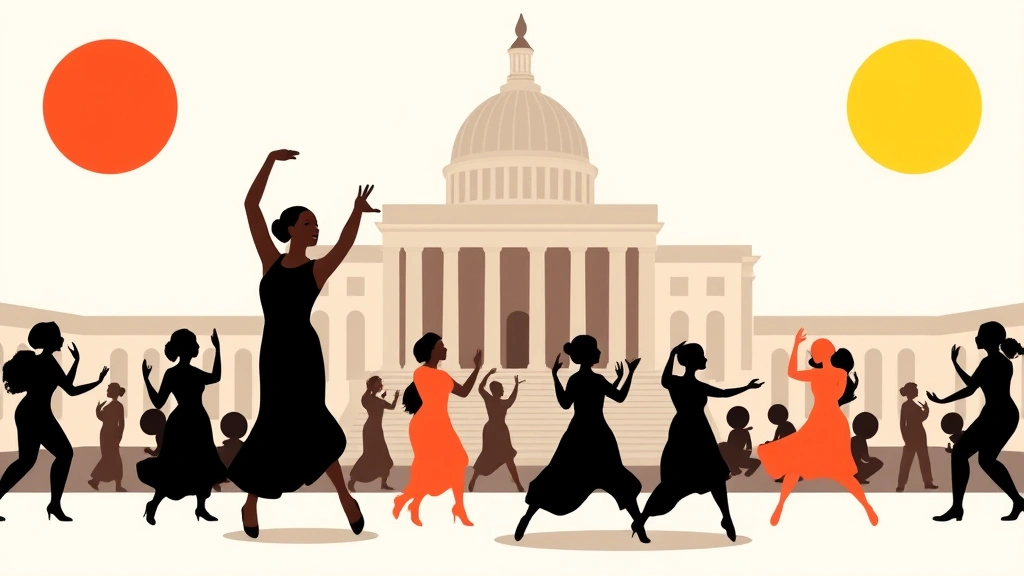
The Library of Congress has opened a special collection honoring choreographer Leni Wylliams, offering dance professionals unprecedented access to notes, sketches, and materials that reveal his creative process.
Hey there, dance community. I was just thinking about how we preserve our art form's history, and something pretty special crossed my desk. The Library of Congress has made a significant collection honoring choreographer Leni Wylliams available to the public. This isn't just another archive—it's a tangible connection to a creative mind that shaped American dance.
For those who might not be familiar, Leni Wylliams was a force. His work blended technical precision with raw emotional storytelling in ways that still influence choreographers today. Having his materials at the Library of Congress means they're not locked away in some private vault. They're there for students, researchers, and working professionals like us to explore.
### What This Collection Means for Dance Professionals
Think about it. How often do we get direct access to a master's process notes, sketches, and personal correspondence? This collection offers exactly that. It's a rare window into the creative journey—the messy, brilliant, human part of choreography that usually stays behind the studio door.
For studio owners and teachers, this is a goldmine for curriculum development. Imagine building a masterclass series around Wylliams' techniques, using primary sources. For choreographers, it's inspiration straight from the source. You can see how he solved movement problems, how a phrase evolved from a scribble to a fully realized piece.
Here's what makes this particularly valuable for our field right now:
- **Historical Context**: Understanding where our techniques come from strengthens how we teach them today.
- **Creative Inspiration**: Seeing original notations and sketches can break creative blocks in your own work.
- **Educational Resource**: This provides authentic materials for dance history and theory classes.
- **Preservation Model**: It shows how institutions can help safeguard our art form's legacy.
I remember talking to a veteran teacher who said, "We stand on the shoulders of those who danced before us." This collection lets us actually see those shoulders—study their structure, understand their strength.
### Bringing Archive Insights Into Your Studio
So how do we make this relevant to the daily grind of running classes and creating work? First, don't think of it as just historical research. Think of it as professional development. Spending an afternoon with Wylliams' notes could spark the solution to a choreographic challenge you've been wrestling with for weeks.
For studio owners, consider creating a "Choreographer Study" segment in your advanced classes. Use materials from collections like this to show students how professional choreographers think. It bridges the gap between classroom technique and real-world creation.
> "The body remembers what the mind forgets," Wylliams once noted in a rehearsal journal. That simple observation speaks volumes about his approach to movement memory and training.
What strikes me is how practical this resource is. We're not talking about dusty artifacts behind glass. These are working documents—the same kinds of notes and sketches we all create in rehearsal. There's something incredibly validating about seeing that a master's process shares the same struggles and breakthroughs we experience.
### Why This Matters Beyond the Dance World
Here's the tangent I promised. When dance achieves this level of institutional recognition, it elevates our entire field. It tells the broader culture that what we do isn't just entertainment—it's cultural heritage worth preserving alongside literature, music, and visual art.
That perception shift matters when you're applying for grants, negotiating studio leases, or explaining the value of dance education to skeptical parents. It gives us legitimate ground to stand on.
The collection's availability also represents accessibility. You don't need to be affiliated with a major university or company to access these materials. Independent choreographers, small studio owners, dedicated students—all can engage with this piece of dance history.
### Making It Work for You
My suggestion? Block out some time this month to explore what's available. Even if you can't visit Washington D.C. in person, many finding aids and digital items are accessible online. Approach it not as an academic obligation but as creative fuel.
Share what you discover with your students or company members. Talk about how Wylliams' approaches might apply to the piece you're currently setting. History doesn't have to live in the past—it can actively inform and improve what we're creating right now.
At the end of the day, this is about connection. Connecting to our field's history, connecting to a master's creative process, and ultimately, connecting more deeply to our own work. That's worth celebrating—and utilizing.