Kinesthetic Conversations: How Movement Creates Meaning in…
Julia Wagner ·
Listen to this article~4 min
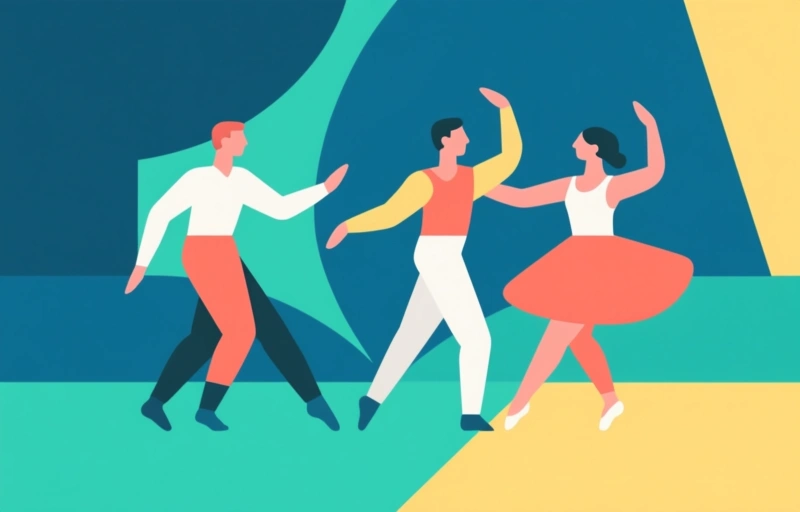
Explore how kinesthetic conversations—the unspoken dialogue of movement, space, and energy—create deeper meaning in dance. Learn practical strategies for teachers and choreographers to foster this essential communication in any studio setting.
You know that feeling when you're watching a truly incredible dance performance? It's more than just steps and music. There's a whole conversation happening right there on the floor, and it's not with words. It's a kinesthetic conversation.
That's a fancy term for something dancers understand instinctively. It's how bodies communicate with each other through movement, space, and energy. Think about it like this: a duet isn't just two people dancing near each other. It's a dialogue of push and pull, of leading and following, of tension and release.
### What Exactly Is Kinesthetic Awareness?
Let's break it down. Kinesthetic awareness is your body's internal GPS. It's your sense of where your limbs are in space without having to look. For dancers, this sense is everything. It's what allows a ballerina to execute 32 fouettés without falling. It's what lets a hip-hop crew hit a formation with perfect unison.
When you develop this awareness, you're not just learning choreography. You're learning a new language. Your body becomes fluent in expressing ideas that words can't quite capture.
### Building Conversations in Your Studio
So how do you, as a teacher or choreographer, foster these conversations? It starts with the basics, but it goes way beyond them.
- **Focus on connection exercises.** Before you even start a combo, have your dancers work in pairs. Simple weight-sharing exercises, mirroring, or even just maintaining eye contact while moving through space can build that essential non-verbal rapport.
- **Teach dancers to listen with their whole body.** It's not just about hearing the music. It's about feeling the energy of the person next to you. Are they pulling away? Leaning in? That's the conversation starting.
- **Choreograph the silence, not just the steps.** The moments of stillness, the pauses, the breaths—these are the punctuation in your movement sentence. They give the audience time to absorb what was just said.
I remember a modern piece I choreographed a few years back. The most powerful moment wasn't the big lift or the fast turn sequence. It was when two dancers simply walked toward each other from opposite sides of the stage, stopped about three feet apart, and just breathed together for eight counts. The audience held its breath with them. That was the heart of the conversation.
### Why This Matters for Every Class
You might be thinking, "This sounds great for professional companies, but what about my Tuesday night beginner adult tap class?" Here's the thing: kinesthetic conversation makes dance more rewarding for everyone.
When a student finally feels that connection—to the music, to their own body, to the person dancing beside them—that's when the magic happens. That's when they move from just doing the steps to truly dancing. It builds community in your studio faster than any social event. It turns a group of individuals into a cohesive ensemble.
It also makes you a better teacher. When you can read the room's energy, you can adjust your pacing. You can see when a concept isn't landing and find another way to explain it through movement. You're having a conversation with your class, and they're responding with their bodies.
### The Takeaway for Dance Professionals
Our art form is built on this unspoken dialogue. Whether you're setting a piece for a competition team, teaching a preschool creative movement class, or running a professional studio, prioritizing this layer of communication elevates everything you do.
Don't just teach the steps. Teach the conversation. Create an environment where dancers are encouraged to listen, to respond, and to speak with their movement. The result won't just be better technique. It'll be more powerful, more authentic, and more human art. And honestly, isn't that why we all fell in love with dance in the first place? It's the most beautiful conversation you'll ever have, without saying a single word.