How White Light Elevates Dance Performance at Dance/Offline
Julia Wagner ·
Listen to this article~4 min
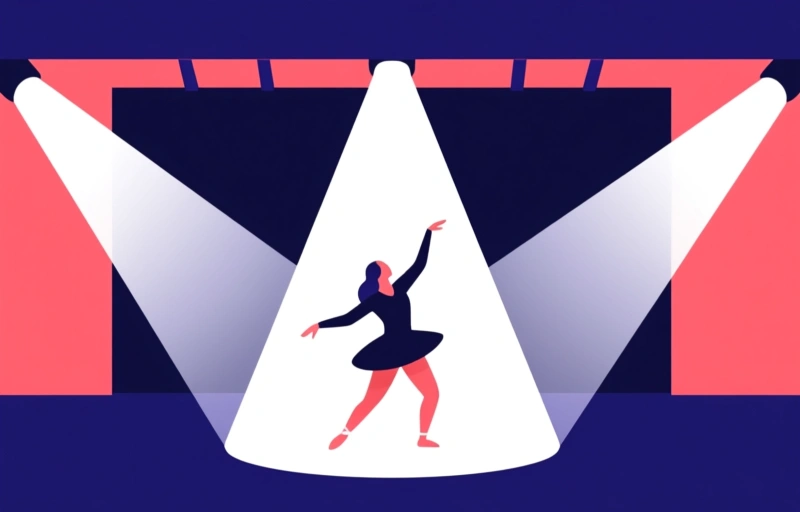
Discover how innovative lighting transformed Dance/Offline's showcase and learn practical tips to elevate your own studio's performances through intentional lighting design.
You know that feeling when the lighting in a dance studio just clicks? It's not just about seeing the dancers—it's about feeling the performance. That's exactly what happened at Dance/Offline's recent showcase, where White Light's innovative approach transformed the entire experience.
Let's talk about why lighting matters more than you might think. It's not just technical equipment. It's the invisible partner that guides the audience's eye and amplifies every emotion. When done right, lighting doesn't just illuminate—it communicates.
### The Science Behind the Spotlight
Good dance lighting follows the same principles as good choreography. It has rhythm, dynamics, and intention. White Light's team understands this intuitively. They don't just turn on lights—they craft visual narratives that move with the dancers.
Think about it: a sharp spotlight can isolate a soloist, while soft washes of color can create emotional landscapes. The transitions between lighting states? Those are just as choreographed as the dance moves themselves. It's all about timing and precision.
### Practical Applications for Your Studio
So how can you apply these concepts without a massive budget? Start with these fundamentals:
- Focus on angles: Front lighting ensures visibility, but side and back lighting create depth and dimension
- Use color temperature wisely: Warmer tones (around 3200K) feel intimate, while cooler tones (5600K+) create energy
- Control intensity: Not every moment needs maximum brightness—sometimes shadows tell the story
- Consider movement: Even simple moving lights can follow dancers across a 40-foot stage
Remember, the goal isn't to replicate a Broadway production. It's about enhancing what you already do well. Most studios can dramatically improve their lighting with just a few strategic adjustments.
### Why This Matters for Dance Professionals
Here's something I've learned from working with countless studios: great lighting isn't a luxury—it's a teaching tool. When students can see their movements clearly, they correct form faster. When performances feel professional, dancers perform with more confidence.
One choreographer told me recently, "The right lighting doesn't just show the dance—it completes it." That stuck with me. Because when every beat is hit with both movement and light, the audience experiences something truly special.
### Making It Work on Any Budget
You don't need to spend thousands of dollars to see improvement. Start with what you have. Clean your existing fixtures. Replace old bulbs. Experiment with simple color gels that cost just a few dollars each. Sometimes the most impactful changes are the simplest ones.
If you're considering new equipment, LED fixtures have become much more affordable. Many quality options now sit in the $200-$500 range per unit, and they'll save you money on energy and replacement costs over time.
### The Takeaway for Today's Dance Community
What happened at Dance/Offline wasn't magic—it was intentional design. White Light's success came from understanding dance from the inside out. They listened to choreographers, watched rehearsals, and created lighting that served the art first.
That's the approach we should all take. Whether you're lighting a small studio class or a major production, remember: your lighting should dance too. It should breathe with the performers, highlight their strengths, and create an environment where movement can truly shine.
The next time you're setting up for class or performance, take an extra moment with your lighting. Ask yourself: Does this support what's happening on the floor? Does it enhance the emotional journey? Because when light and movement work together, that's when the real magic happens.