Hervé Koubi's Dance: Blending Cultures and Breaking…
Sarah Jenkins ·
Listen to this article~4 min
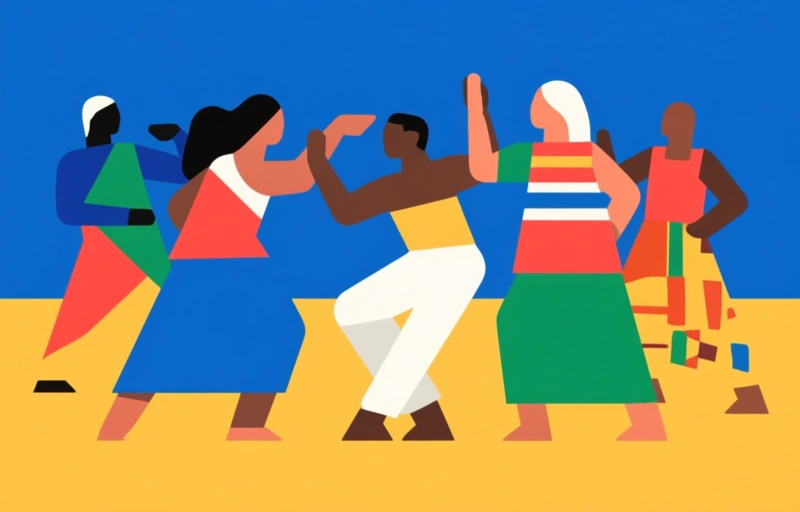
Explore how Hervé Koubi's concept of 'porous dance'—blending styles and cultures—offers powerful lessons for dance studios and choreographers seeking to innovate and build more inclusive, creative communities.
You know that feeling when you watch a performance and it just... gets you? It's not just about the steps or the music. It's something deeper, something that connects across all the invisible lines we draw between art forms and cultures. That's the world Hervé Koubi invites us into.
His company, Compagnie Hervé Koubi, isn't just making dances. They're having a conversation with the entire history of movement. They ask a simple, powerful question: what happens when we let dance be porous?
### What Does 'Porosity' in Dance Even Mean?
Think of it like this. Imagine a sponge. It's full of holes, right? It can soak up water from anywhere. Porosity in dance is that same idea. It's about being open, letting influences from different styles, cultures, and histories seep in and become part of the work.
Koubi's dancers might blend classical ballet lines with the raw power of street styles. They might weave North African rhythms with contemporary electronic scores. It's not a fusion in the traditional sense. It's more organic. The boundaries aren't just crossed; they're dissolved.
For studio owners and choreographers, this is a goldmine of inspiration. It challenges the way we often compartmentalize our classes. Why keep hip-hop in one room and contemporary in another? What magic could happen in the space between?
### Lessons for Your Studio and Choreography
So, how do you bring this idea of porous dance into your own work? You don't need to fly a company in from France. You can start small, right where you are.
- **Mix up your playlists.** Pair a classical piece with a modern beat in your next warm-up. See how it changes the dancers' energy.
- **Cross-train your teachers.** Have your ballet instructor take a capoeira workshop. The new vocabulary will naturally filter into their teaching.
- **Create collaborative projects.** Bring together students from different disciplines—maybe your competition team and your adult beginners—to create one piece.
The goal isn't to create a messy blend. It's to honor each form's integrity while finding the common human thread that runs through all of them. It's about connection, not just combination.
As one of Koubi's collaborators once noted, 'The body remembers everything.' Our job is to give it a rich library of memories to draw from.
### Building a More Connected Dance Community
This approach does more than just create interesting art. It builds community. When we celebrate the porosity of dance, we celebrate diversity. We acknowledge that great movement can come from anywhere—a street corner, a sacred ritual, or a royal court centuries ago.
For your studio, this mindset can be a powerful differentiator. Parents and students are looking for more than just technique. They're looking for a place that teaches cultural awareness, empathy, and creative thinking through the body.
Start a 'culture of the month' in your classes. Explore the history behind a specific dance style. Invite a guest artist from a different tradition. These small steps make your studio a hub for curious, globally-minded dancers.
At the end of the day, Hervé Koubi's work reminds us that dance is a living, breathing language. It's always evolving, always absorbing new words and accents. Our studios and our choreography should do the same. Let's be less like walled gardens and more like open fields, where beautiful, unexpected things can take root and grow together.