Gamson's Space-Saving Dance Studio Ideas at The Odyssey
Julia Wagner ·
Listen to this article~4 min
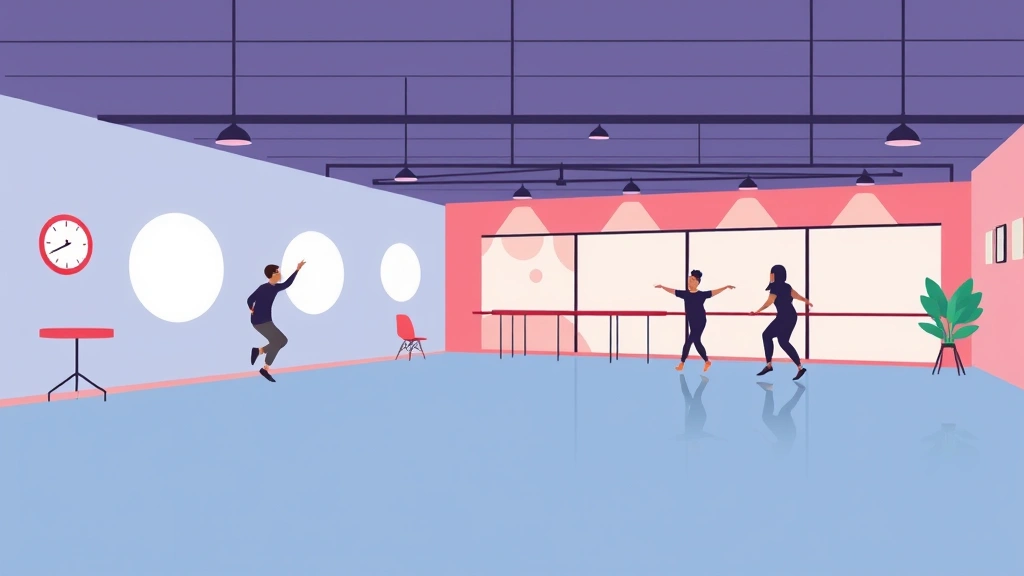
Discover how Gamson's innovative showcase at The Odyssey transformed small space limitations into creative advantages for dance studios and choreographers working with compact rooms.
You know that feeling when you walk into a dance studio and think, 'How am I supposed to choreograph anything meaningful in here?' I've been there. Many of us have. Space constraints can feel like creative handcuffs, especially when you're working with rooms that measure just 20 by 30 feet or less.
That's why Gamson's recent showcase at The Odyssey in Los Angeles felt like such a breath of fresh air. Titled "Clever Ideas For Smaller Rooms," it wasn't just a performance—it was a masterclass in creative problem-solving for dance professionals. Let's talk about why this matters for your studio or choreography practice.
### Rethinking Vertical Space
Most dancers and choreographers focus on the floor. It's our canvas, right? But Gamson's work reminded everyone to look up. When horizontal space is limited, the vertical dimension becomes your best friend.
They incorporated lifts and levels in ways that made a 600-square-foot room feel expansive. Dancers weren't just moving side to side—they were creating depth through elevation changes. One particularly memorable sequence had dancers ascending and descending from platforms just 18 inches high, completely transforming the spatial dynamics.
### Smart Prop Usage
Props can either clutter a small space or enhance it dramatically. The key is intentionality. Gamson used minimal, multi-functional pieces:
- Lightweight fabric panels that could be walls one moment and costumes the next
- Modular cubes that stacked to create different levels
- Simple chairs that became partners in the choreography
What made it work was how each prop served multiple purposes. Nothing was just sitting there taking up precious real estate. Every item earned its place in the room.
### Choreographic Compression
This might be the most valuable takeaway for choreographers. Gamson demonstrated that intricate movement doesn't require vast distances. They created compelling sequences within a 10-foot diameter, proving that intensity can replace expanse.
As one dancer mentioned during a post-show discussion, 'Sometimes constraints force more interesting choices than unlimited freedom does.' That's worth sitting with for a moment. Are we using space as a crutch when we should be using it as a catalyst?
### Practical Applications for Your Studio
So how do you translate these ideas to your own work? Start by measuring your actual space. Know exactly what you're working with—down to the inch. Then experiment with these approaches:
First, map out traffic patterns. Where do dancers naturally converge? Can you choreograph to avoid those bottlenecks? Second, consider sight lines. In smaller rooms, every audience member needs a clear view, which affects staging significantly.
Finally, embrace the intimacy. A smaller space creates a different energy—more immediate, more visceral. That's not a limitation; it's a different kind of connection with your audience.
### The Bigger Picture
What Gamson really demonstrated was a mindset shift. Instead of lamenting what they didn't have, they maximized what they did. They treated spatial limitations as creative parameters rather than obstacles.
For studio owners, this means re-evaluating how you market your space. That cozy 800-square-foot studio isn't 'too small'—it's 'intimately scaled for focused work.' For choreographers, it means developing adaptable pieces that can shine in various venues.
The truth is, most of us aren't working in massive, state-of-the-art facilities. We're in converted storefronts, community centers, and yes, smaller rooms. Gamson's work at The Odyssey shows us that's not just okay—it can be an advantage when approached with creativity and intention.
Next time you're feeling cramped in your rehearsal space, remember: some of the most innovative dance happens when we're forced to think inside the box, because sometimes, that's literally all the space we have.