From Studio to Ship: A Dancer's Journey to the High Seas
Julia Wagner ·
Listen to this article~5 min
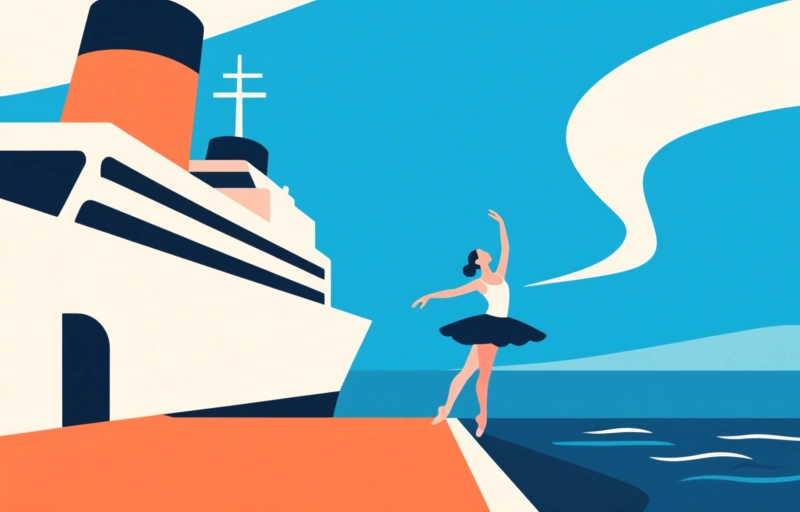
Discover how a dancer's journey from a local studio to performing on cruise ships highlights alternative, exciting career paths in dance, emphasizing adaptability and the power of versatile training.
You know that feeling when your creative world suddenly expands beyond the four walls you're used to? That's exactly what happened to one dedicated dancer from Stone Studio. Their journey from a familiar dance floor to performing on the high seas is a story that reminds us all why we chase this art form in the first place. It's not just about the steps—it's about where those steps can take you.
Let's talk about that transition for a second. Going from a local studio, maybe 1,500 square feet of sprung floor you know every inch of, to the deck of a cruise ship sailing under open skies. The temperature shifts from a controlled 72°F to salty ocean breezes. The audience changes from familiar faces to travelers from all over the world. It's a leap, and it's one that requires more than just technical skill.
### The Mindset Shift for Performing Artists
What does it take to make that jump? First, it's adaptability. Studio spaces are predictable. The floor is consistent, the mirrors are fixed, and the temperature is stable. On a ship, you're dancing on a surface that might have a subtle roll. The 'stage' could be outdoors, with wind being your unexpected partner. You learn to anchor your core not just for technique, but for stability. You trade the echo of a studio for the sound of waves and live music.
It also demands a different kind of stamina. A typical studio rehearsal might last three hours. On a ship, you might have multiple shows in a week, each requiring peak energy. You're not just a dancer; you're a traveler, an ambassador of the art, and a crew member. Your warm-up routine becomes sacred, your recovery even more so.
### Building a Career Beyond the Local Scene
This path isn't for everyone, and that's okay. But it highlights a crucial point for dance professionals: your career doesn't have to be linear. The traditional route often feels like: local studio, company audition, professional company. But what about:
- Cruise line performer
- Resort entertainment dancer
- Theme park show cast member
- Touring production dancer for unique events
These are all viable, exciting, and financially sustainable paths. They offer a chance to see the world while doing what you love. The pay can vary, but cruise line contracts often include room, board, and travel, with performance salaries starting in the range of $1,800 to $2,500+ per month, depending on experience and role.
As one seasoned performer once told me, 'The studio taught me how to dance. The ship taught me how to perform.' There's a profound difference. In a studio, you're often dancing for your teacher, your peers, or the mirror. On a stage at sea, you're dancing for people on vacation, creating a moment of magic in their journey. Your job is connection, not just perfection.

### Practical Steps for Making the Transition
If the idea of taking your talent to new venues sparks something in you, here's how to start thinking about it:
- **Research the Market:** Look into major cruise lines, resort chains, and touring productions. Each has its own style and audition process.
- **Diversify Your Skills:** Are you only a ballet dancer? Maybe add some jazz, contemporary, or even character work to your repertoire. Versatility is king.
- **Network, But Differently:** Connect with dancers who have done these gigs. Their insights on contracts, daily life, and the pros/cons are invaluable.
- **Consider the Logistics:** These are contract-based positions, often 6-9 months long. It's a commitment to a nomadic lifestyle for a period.
The journey from a hometown studio to a global stage is a testament to the transportive power of dance. It proves that our training grounds are just that—grounds from which we launch. The technique, discipline, and passion cultivated in those familiar rooms are the very tools that allow us to thrive in the most unexpected and magnificent places. So the next time you're in the studio, remember: you're not just preparing for the next recital. You might be preparing for an adventure.