Flamenco Meets Winter Olympics: Antonio Najarro's…
Julia Wagner ·
Listen to this article~5 min
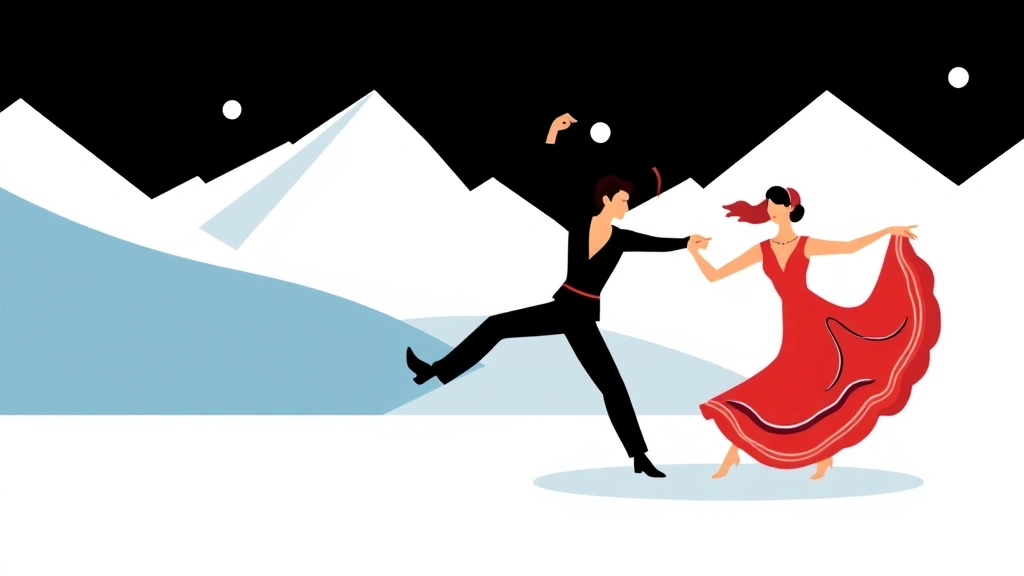
Discover how flamenco maestro Antonio Najarro brought fiery Spanish passion to the Winter Olympics, blending grounded dance with figure skating's grace. A lesson in artistic fusion for every choreographer.
You know, sometimes the most unexpected artistic fusions create the most memorable moments. That's exactly what happened when flamenco master Antonio Najarro brought his fiery Spanish passion to the ice-cold world of the Winter Olympic Games. It's a story about breaking boundaries and proving that dance, in all its forms, belongs everywhere.
For dance studio owners and choreographers, Najarro's journey offers some fascinating lessons. It's not just about steps and routines—it's about vision, adaptation, and the courage to blend seemingly opposite worlds.
### Who Is Antonio Najarro?
Antonio Najarro isn't your average choreographer. He's a force in the flamenco world, known for his intense, emotional, and technically brilliant work. His career has been built on a deep respect for tradition, but also a fearless drive to innovate. Think of him as someone who honors the roots of the art while constantly asking, "What's next?"
That innovative spirit is precisely what caught the attention of Olympic organizers. They weren't looking for a traditional figure skating choreographer. They wanted something fresh, something that would make audiences sit up and take notice.
### The Challenge: Flamenco on Ice
Let's be real for a second. Flamenco is all about grounded power, sharp footwork, and a connection to the earth. Figure skating is about gliding, soaring, and defying gravity. At first glance, they couldn't be more different.
Najarro's task was monumental. He had to translate the soul-stirring rhythms of flamenco—the *zapateado* footwork, the dramatic arm movements (*braceo*), and that raw emotional intensity—onto a slippery, cold surface. He had to make it work for athletes whose primary language was blades and jumps, not heels and palmas.
He approached it like any great artist adapts to a new medium. He studied the skaters' movements. He learned the physics of the ice. Then, he began to translate.
- He adapted flamenco's percussive footwork into powerful edge work and toe steps on the ice.
- The flowing, dramatic arm movements became extensions of the skaters' lines, adding drama to their spirals and spins.
- The emotional narrative of flamenco—its stories of love, loss, and joy—became the core of the skating program's storytelling.
It was a masterclass in artistic translation. He didn't force flamenco onto the ice; he let the essence of flamenco inspire a new form of movement *for* the ice.
### Why This Matters for Dance Professionals
So, why should a dance studio owner in Ohio or a choreographer in California care about a flamenco artist at the Olympics? Because Najarro's story is a powerful metaphor for our own work.
We're all in the business of communication and emotion. Sometimes, we get stuck in our own lanes—ballet, hip-hop, contemporary. Najarro reminds us that the most powerful art often happens at the intersections.
> "The fusion of disciplines isn't about dilution; it's about creating a new, richer vocabulary for expression."
What if you brought a tap dancer's rhythm into a contemporary piece? What if you used the spatial patterns of a ballroom formation in a hip-hop routine? The possibilities are endless when we stop seeing walls and start seeing doorways.
For your studio, this could mean offering fusion classes that attract new students. For a choreographer, it could mean pitching a bold, cross-genre concept for a competition or show. It's about expanding what dance can be and who it can reach.
### The Lasting Impact
Najarro's Olympic work did more than just create a beautiful performance. It challenged perceptions. It showed a global audience that flamenco is a dynamic, evolving art form, not a museum piece. It introduced the passion of Spanish dance to millions who might never see a live *tablao*.
For the skaters involved, it was transformative. They didn't just learn new steps; they learned a new way to channel emotion and character into their skating. That's the real magic of collaboration—everyone grows.
So, the next time you're planning a recital theme or brainstorming a new class offering, think about Antonio Najarro. Think about the power of unexpected fusion. Your most groundbreaking idea might be waiting at the intersection of two styles you never thought could dance together. The ice is just another stage, and every tradition has a place in the future of movement.