First Light: A Dance Studio's Guide to Morning Choreography
Julia Wagner ·
Listen to this article~5 min
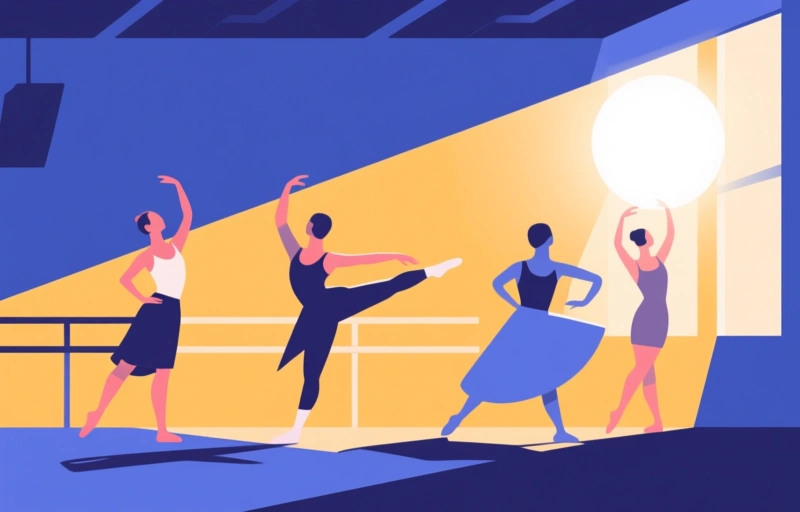
Discover how dance studios and choreographers can harness the creative potential of morning hours. Learn practical strategies for structuring early classes, designing choreography sessions, and building rituals that maximize focus and artistic output from the first light of day.
You know that feeling, right? The studio is quiet, the floor is clean, and the morning light is just starting to stream through the windows. It's a magical time for any dance professional. That first hour can set the tone for your entire creative day. Let's talk about how to harness that 'first light' energy in your studio or choreography practice.
It's not just about showing up early. It's about intention. How you structure those initial moments can impact everything from your dancers' focus to the quality of the movement you develop. I've worked with studios that treat mornings as a rushed warm-up, and others that treat them as sacred creative space. The difference in output is night and day.
### Creating a Morning Ritual for Your Studio
Think of your morning studio time like a dancer's plié. It's the fundamental preparation for everything that follows. A strong, consistent start builds stability. For choreographers, this might mean 15 minutes of silent stretching or journaling before touching the music. For studio owners, it could be about how you prepare the space—the temperature, the lighting, the energy.
What does your 'first light' ritual look like? Is it chaotic, or is it calm? Here's what I've seen work wonders:
- **Arrive before your dancers.** Give yourself 20-30 minutes alone in the space.
- **Set the environment.** Adjust the thermostat to a comfortable 68-70°F. Turn on soft, ambient lighting to complement the natural morning light.
- **Create a soundscape.** Maybe it's complete silence, or perhaps a single, repeating instrumental track. Avoid overwhelming playlists first thing.
- **Place a simple intention.** Not a to-do list, but one creative goal for the session. For example, 'explore fluidity in the upper back' or 'connect breath to movement initiation.'
### Choreographing with Morning Energy
Morning bodies are different than evening bodies. Muscles are cooler, minds are often clearer but slower to activate. Smart choreographers use this to their advantage. Instead of fighting the natural rhythm, they design morning sessions that respect it.
Consider starting with floor work or slow, sustained stretches that don't require explosive power. Build gradually. That tricky jump sequence you're perfecting? Save it for when the body is fully awake and warm, usually after that first hour. I remember a ballet choreographer who would only teach adagio combinations before 10 AM. His logic was simple: 'If you can find the line and control slowly, the speed will come with quality.'
He was right. The patience required in the morning often leads to more thoughtful, integrated movement later.
### Structuring Early Dance Classes
For studio owners and teachers, those first classes of the day are unique. You might have dedicated adult beginners, pre-professional teens, or young children. The 'first light' approach needs to adapt. For adult classes, emphasize the mental and physical reset. For younger students, focus on playful engagement to ease them into the day.
A quote from a seasoned studio owner in Chicago always stuck with me: *'We don't just open the doors at 7 AM. We open a possibility. For some students, this is their only quiet hour in a chaotic day. We honor that.'*
That philosophy changed how she scheduled instructors and selected music for early sessions. It became less about cramming in technique and more about providing a holistic experience.
### The Practical Logistics
Let's get practical. If you want to cultivate a successful morning culture, you need to back it up with smart logistics. Is your studio easily accessible that early? Is there safe, well-lit parking? If you're in a colder climate, is the heat programmed to kick on before the first class? These seem like small details, but they're the difference between a dancer braving the 6 AM chill and hitting snooze.
Think about cost too. Offering early-bird pricing can be a great incentive. Maybe a 10-class card for morning-only sessions is $10 less than the standard card. It fills your underutilized slots and builds a community of early risers.
Ultimately, 'first light' is a metaphor. It's about beginnings, freshness, and potential. Whether you're sketching out choreography in an empty studio or teaching a sunrise yoga-for-dancers class, that time holds a special kind of creative power. It's quiet enough to listen—to your own ideas and to the needs of your dancers' bodies. Don't let that time slip away in a blur of administrative tasks. Claim it. Structure it. See how the quality of your work, and the atmosphere of your space, begins to shift with the dawn.