Dancing Wheels: Redefining Dance for Wheelchair Users
Julia Wagner ·
Listen to this article~4 min
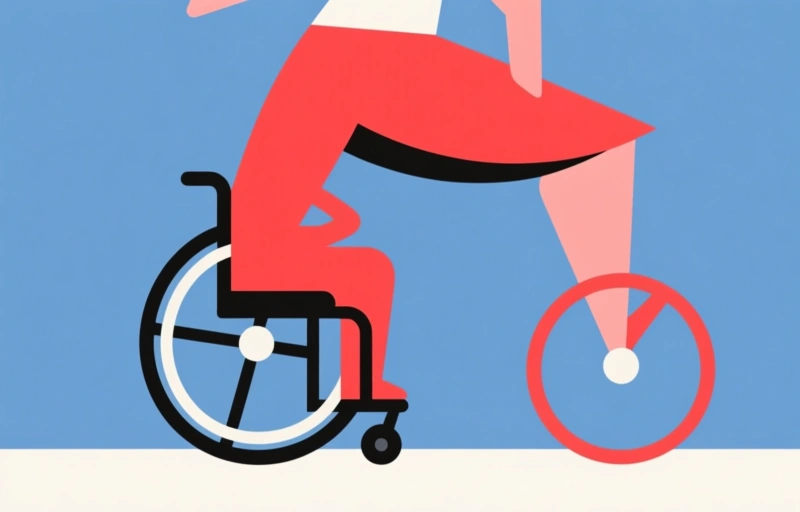
Discover how Dancing Wheels is transforming dance for wheelchair users. Learn how studios adapt choreography and the profound benefits of inclusive, mixed-ability dance classes for everyone involved.
You know, I was thinking about dance studios the other day. We often picture them as spaces filled with pirouettes, leaps, and pointed toes. But what if dance looked completely different? What if the most beautiful movement came from wheels spinning in perfect rhythm?
That's exactly what the incredible Dancing Wheels company is showing us. They're not just adding wheelchair users to existing routines. They're fundamentally reimagining what dance can be. It's about expression, not just steps.
### How Do Studios Adapt Choreography?
This is the big question, right? If you run a studio, you might wonder where to even begin. The key is to shift your mindset from adaptation to co-creation. It's not about taking a routine and making it 'work' for a chair. It's about building something new together.
Think about space. A dancer in a wheelchair uses a different spatial plane. Their movements are often wider, incorporating the full reach of their arms and the turn radius of their chair. Choreography starts to think in circles and sweeping arcs, not just vertical lines.
- Focus on upper body expression and fluid arm movements
- Utilize the wheelchair as a dynamic part of the dance, incorporating spins and momentum
- Create formations that allow for different pathways and levels
- Emphasize musicality and emotional connection over specific footwork
It's a collaborative process. The dancer and choreographer work as partners to discover what movement is possible and beautiful.

### The Surprising Benefits of Inclusive Classes
Here's something that might surprise you. Inclusive classes aren't just beneficial for the dancers using wheelchairs. They transform the experience for everyone in the room.
Mixed-ability groups foster a deeper sense of community and empathy. Dancers start to see movement as a universal language, not a specific set of physical skills. It breaks down barriers and challenges everyone's preconceptions about what a 'dancer' looks like.
As one instructor told me, 'When you teach an inclusive class, you become a better teacher for all your students.' You learn to communicate more clearly, to describe movement in new ways, and to value intention over imitation.
The energy in these rooms is palpable. There's a shared joy in creation that goes beyond technical perfection. It's about the collective experience of making something meaningful together.

### Making Your Studio More Inclusive
So, where do you start? It doesn't require a massive overhaul on day one. Small steps make a big difference.
First, look at your physical space. Are your doorways at least 36 inches wide? Is there a clear, smooth path to the studio floor? Simple adjustments can make your studio welcoming.
Next, look at your language. In your class descriptions and marketing, use phrases like 'all abilities welcome' or 'adaptive options available.' This signals that you're thinking about accessibility.
Finally, and most importantly, be open to learning. Reach out to organizations like Dancing Wheels for resources or consider bringing in a consultant for a workshop. The investment in education pays off in creating a truly welcoming environment.
Dance, at its heart, is about human connection and expression. When we expand our definition of who can dance, we don't limit the art form. We actually set it free. We discover new rhythms, new shapes, and new stories waiting to be told. And honestly, that's what makes dance so powerful in the first place.