Capturing 1950s Dance Students: A Nostalgic Look at Local…
Julia Wagner ·
Listen to this article~4 min
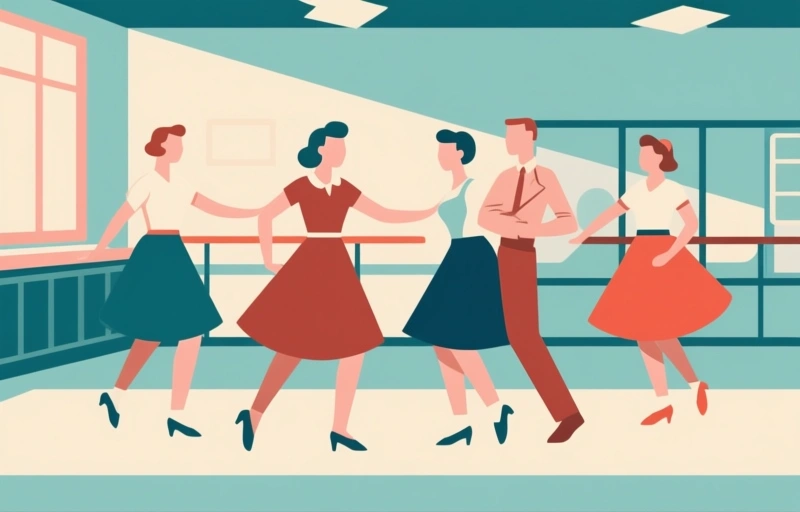
Explore the timeless world of 1950s local dance studios. Discover how community, foundational training, and accessible classes created lasting legacies and what today's instructors can learn from this nostalgic era.
You know, sometimes I stumble across old photos or stories about local dance students from the 1950s, and it just stops me in my tracks. There's something magical about that era—the crisp petticoats, the polished tap shoes, the way communities gathered in church basements and school gymnasiums to learn the art of movement. It wasn't just about steps; it was about discipline, grace, and a shared passion that echoed through small towns across America.
These studios were often run by dedicated instructors who might have charged just a few dollars a month. Imagine paying $5 or $10 for a whole month of lessons! They worked in spaces that weren't always perfect—maybe a room that was 30 feet by 40 feet, with wooden floors that had seen better days. But the energy in those rooms? Absolutely priceless.
### The Heartbeat of Community Dance
What really defined these 1950s dance classes wasn't the fancy facilities. It was the sense of community. Parents carpooled in station wagons, driving miles to get their kids to recitals. Students practiced for hours, not for fame or competition trophies, but for the sheer joy of performing at the annual town hall show. The focus was on fundamentals: posture, rhythm, and expression.
I think today's studio owners and choreographers can learn a lot from that approach. It reminds us why we started teaching in the first place. It wasn't about the Instagram reel or the viral video. It was about connection—between teacher and student, between music and movement, between a dancer and their own potential.
### Lessons from a Simpler Time
Let's be honest, running a dance studio today comes with a mountain of logistics. But the core principles from the 1950s still ring true. Here are a few timeless takeaways:
- **Foundation First:** Drills on basic positions and steps were non-negotiable. Mastery came from repetition.
- **Character Building:** Discipline and respect were taught alongside the cha-cha. Teachers were mentors.
- **Accessibility:** Costs were kept low so most families could participate. It was about inclusion.
- **Community Performance:** The annual recital was the highlight, uniting the entire town.
One retired instructor I spoke with once said, 'We weren't creating stars; we were building character through dance.' That philosophy fostered resilience and a deep love for the art form that lasted lifetimes.
### Bringing the Past into Present Practice
So how do we translate that 1950s spirit into today's world? It starts by remembering the 'why.' Maybe it's incorporating more live piano accompaniment in class, even if it's just for one session a month. Or dedicating time to dance history, showing students clips of the very styles they're learning. It could be as simple as fostering a culture where students cheer for each other's progress, not just their own.
Creating that supportive, foundational environment is what turns a dance class into a dance community. It's what makes students return year after year, long after they've stopped growing out of their leotards. The techniques have evolved, the music has changed, but the human need for creative expression and shared experience? That's timeless.
Looking back at those local dance students from over seventy years ago gives us more than just nostalgia. It offers a blueprint. A reminder that success isn't always measured in trophies or sold-out competitions. Sometimes, it's measured in the quiet confidence of a student mastering their first turn, the pride in a parent's eye, and the enduring legacy of a local studio that became a second home. That's the real choreography worth perfecting.