Can AI Truly Replicate Human Dance? Exploring the Limits
Sarah Jenkins ·
Listen to this article~4 min
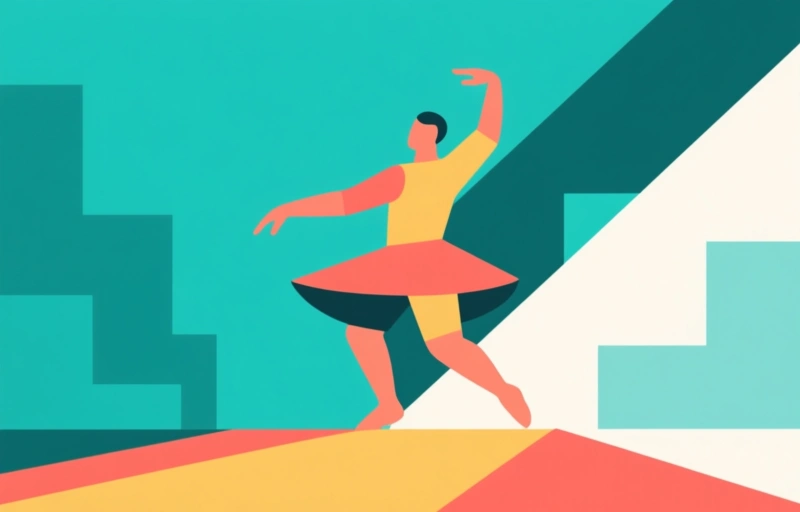
Can AI truly capture the soul of dance? We explore what artificial intelligence gets right about choreography and the irreplaceable human elements it misses. A look at AI as a tool for dancers.
So, you've probably seen those videos online. You know the ones—where an AI generates a dance sequence that looks... almost human. It's fascinating, right? But it also makes you wonder. Can artificial intelligence really capture the essence of dance? The short answer is: it's complicated. Let's talk about what AI can do, what it struggles with, and why that matters for everyone in the dance world.
### What AI Gets Right About Dance
First, let's give credit where it's due. Modern AI is incredibly good at pattern recognition. It can analyze thousands of hours of dance footage and learn the mechanics. It understands things like:
- Basic body positioning and joint movements
- Common sequences and transitions from various styles
- Timing and rhythm in relation to music
This allows AI to generate choreography that is technically correct. It can create sequences that follow the rules of ballet, the isolations of hip-hop, or the flow of contemporary. For choreographers feeling stuck, it can be a tool to spark new ideas—a digital brainstorming partner that never gets tired.
### The Human Element AI Can't Capture
Here's where things get tricky. Dance isn't just about moving your body from point A to point B. It's about everything that happens in between. It's the emotion, the intention, the story. An AI can mimic a sad movement, but it doesn't *feel* sadness. It can't draw from personal experience, heartbreak, joy, or cultural heritage to infuse a performance with meaning.
Think about it like this. You can give a computer a recipe for your grandmother's soup. It might combine the ingredients perfectly. But it will never understand the love she put into it, the memories of her kitchen, or why it tastes like home. Dance has that same soul. It's a conversation between the dancer and the audience, and right now, AI is just repeating words it's heard without understanding the language.
### A Tool, Not a Replacement
This isn't about AI versus human dancers. That's the wrong way to look at it. The real question is: how can we use this technology to enhance our art? Imagine using AI as a collaborative tool.
A choreographer could use it to visualize complex formations for a large ensemble quickly. A teacher could use it to show students variations on a step they're struggling with. Dance studios could use motion-capture AI to provide detailed feedback on a dancer's alignment, helping prevent injuries. The potential is there, but it's in support of the artist, not in place of them.
As one seasoned choreographer put it, "AI can write the notes, but it can't compose the symphony."
### The Future of Dance in an AI World
So, where does this leave us? The dance floor isn't about to be taken over by robots. At least, not in the way we express true artistry. The rise of AI should challenge us to double down on what makes human dance irreplaceable:
- Authentic emotional expression
- Cultural context and storytelling
- The unique imperfections that make a performance real
- The live, breathing connection between performers
Our role as dancers, teachers, and choreographers is to embrace the tools that help us, while fiercely protecting and nurturing the human heart of our craft. AI can replicate steps, but it can't replicate a soul. And that's what dance is all about.
What do you think? Is AI a helpful assistant or a creative threat? The conversation is just beginning, and it's one we should all be having.