Benjamin Millepied's Queer Romeo & Juliet: Modern Dance Revolution
Julia Wagner ·
Listen to this article~4 min
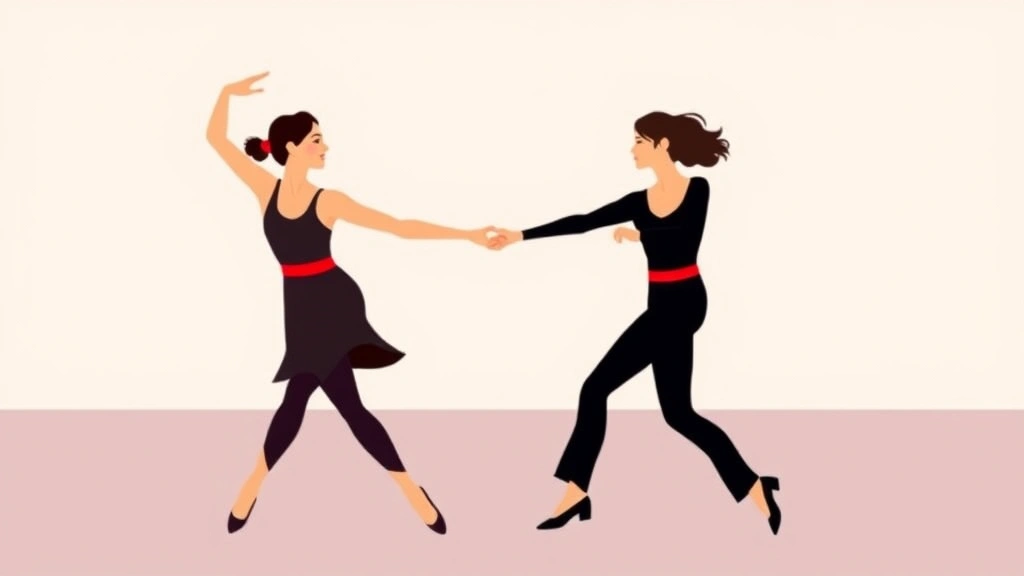
Benjamin Millepied reimagines Romeo & Juliet as an explicitly queer ballet, challenging traditions and offering dance professionals fresh perspectives on representation and classical reinterpretation.
You know that feeling when you see something in the dance world that just stops you in your tracks? That's exactly what's happening with Benjamin Millepied's latest project. The acclaimed choreographer, known for his work with the Paris Opera Ballet and his film "Black Swan," is taking on Shakespeare's most famous love story in a way that feels completely of our moment.
He's reimagining Romeo and Juliet as an explicitly queer narrative. This isn't just a surface-level change of casting or costumes. Millepied is diving deep into what this story means when you remove the traditional gender constraints. It's about love in its purest form, without the boundaries we've inherited from centuries of performance tradition.
### Why This Production Matters Right Now
Let's be honest—classical ballet has sometimes struggled to feel relevant to contemporary audiences. The stories can feel distant, the traditions rigid. What Millepied is doing here feels different. He's not just updating the costumes or setting it in a modern city. He's fundamentally questioning who gets to tell this story and who gets to be in it.
This production arrives at a time when dance studios and choreographers across the United States are having important conversations about representation. How do we make our spaces more inclusive? How do we tell stories that reflect the diverse experiences of our students and audiences? Millepied's work provides a powerful case study.
### What Dance Professionals Can Learn
For those of us teaching classes or running studios, there are practical takeaways here. First, it shows the power of reinterpreting classic narratives. Your advanced students don't always need to learn the exact same variations that have been taught for decades. Sometimes, the most powerful learning comes from questioning those traditions.
Second, it demonstrates how to approach sensitive topics with artistic integrity. Millepied isn't doing this for shock value. He's approaching the material with deep respect for both the original text and the contemporary context. That balance is something every choreographer should strive for.
Here's what makes this production particularly noteworthy for dance educators:
- It challenges traditional gender roles in partnering work
- It opens conversations about representation in classical repertoire
- It demonstrates how to honor source material while making it contemporary
- It shows that innovation and tradition can coexist
### The Practical Implications for Studios
If you're running a dance studio, you might be wondering what this means for your programming. You probably don't have the budget of a major ballet company, but that doesn't mean you can't engage with these ideas. Consider how you select music for classes. Think about the stories you tell in your recitals. Even small choices can make your space feel more welcoming.
Millepied himself once said, "Dance should be a living art form, not a museum piece." That's the mindset we need to bring to our studios. Our students come from all backgrounds and identities. Our teaching should reflect that reality.
### Looking Forward
This production won't be for everyone, and that's okay. Traditionalists might prefer their Romeo and Juliet straight from the 19th century. But for those willing to engage with it, this represents something important. It shows that ballet—and dance more broadly—can evolve while maintaining its artistic integrity.
For choreographers creating new work, the lesson is clear: don't be afraid to reimagine. The stories we've inherited aren't set in stone. They're clay waiting to be shaped for new generations. Your next piece might not be a queer Romeo and Juliet, but it could be something equally bold for your community.
At the end of the day, that's what great art does. It makes us see familiar things in new ways. It starts conversations. It pushes boundaries. And in dance studios across the country, that's exactly what we should be encouraging our students to do—both on and off the stage.