Capturing Movement: Behind the Scenes of a University Dance Concert
Julia Wagner ·
Listen to this article~4 min
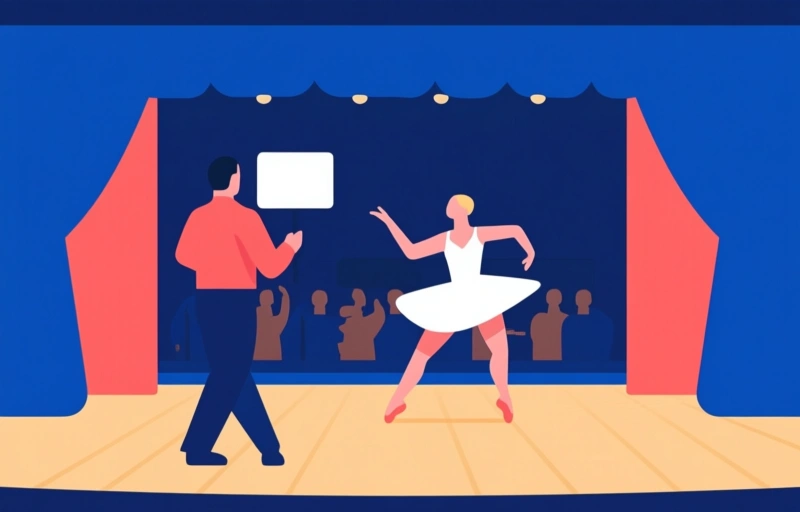
A look behind the curtain of a major dance performance, exploring the choreography, production design, and dancer preparation that creates a breathtaking live experience.
You know that feeling when you watch a dance performance and it just takes your breath away? The way bodies move through space, telling stories without a single word. That's what we're diving into today – not just the final polished show, but what it takes to get there.
As a UX/UI designer, I'm always fascinated by the intersection of art and structure. A dance concert is a perfect example. It's not just about the choreography; it's about lighting, costumes, music, and that intangible energy that fills the room. Let's pull back the curtain a bit.
### The Choreographer's Blueprint
Think of a choreographer like an architect. They start with an empty space – a stage that's maybe 40 feet wide by 30 feet deep. They have to map out every step, every lift, every pause. It's a spatial puzzle where the dancers are the moving pieces. They're not just creating steps; they're crafting an emotional journey for the audience, one that lasts maybe 90 minutes from start to finish.
I once heard a choreographer describe their process like designing a user journey. You have the opening hook, the developing middle, and the satisfying conclusion. Every movement has intent.
### More Than Just Steps: The Production Ecosystem
What the audience sees is just the tip of the iceberg. Here's what's happening behind the scenes:
- **Lighting Design:** This isn't just about being able to see the dancers. Lighting sets the mood, defines the space, and can completely change the feel of a piece. A warm, golden wash feels different than a cold, blue spotlight.
- **Costume Construction:** Dancers need to move freely. Costumes are designed and fitted meticulously, often requiring multiple fittings. Fabrics are chosen for how they flow and react under stage lights.
- **Soundscaping:** Is it live music? A recorded score? The audio quality in a theater is crucial. A muddy sound system can ruin the most beautiful choreography.
- **Rehearsal Logistics:** This is where the real work happens. Hours and hours in the studio, often on a sprung wood floor to protect dancers' joints. Rehearsals can run 4-6 hours a day, weeks before the show.
It's a symphony of different artistic disciplines coming together. When one element is off, the whole experience suffers.
### The Dancer's Mindset: Performance Day
The temperature backstage might be a cool 68 degrees Fahrenheit to keep dancers from overheating in their warm-ups. There's a focused quiet, a mix of nerves and excitement. Dancers might do a specific 20-minute warm-up routine they've practiced for years. It's about preparing both the body and the mind.
> "Dance is the hidden language of the soul," Martha Graham once said. On performance day, every dancer is working to make that language clear and powerful.
They're thinking about spacing, about musicality, about connecting with their fellow performers. It's a live art form – no take-backs, no edits. That's the thrilling part.
### Why This Matters for Studio Owners
If you run a studio or teach classes, you understand this world. But sometimes, we get so caught up in the day-to-day – the $85 monthly tuition, the recital costumes, the 30-minute class schedules – that we forget the bigger picture.
Events like a university concert are incredible teaching tools. They show students what's possible. They demonstrate professionalism, artistry, and collaboration. Taking a group of students to see a show can be more impactful than a dozen technique classes. It gives them something to aspire to.
It also reminds us why we do this. It's not just about teaching pliés and pirouettes. It's about fostering creativity, building confidence, and creating moments of genuine human connection. That's the real magic, whether it's on a grand university stage or in your local studio's yearly recital. The scale might be different, but the heart of it is the same.