Ballet Brings Shakespeare to Life on Stage
Julia Wagner ·
Listen to this article~5 min
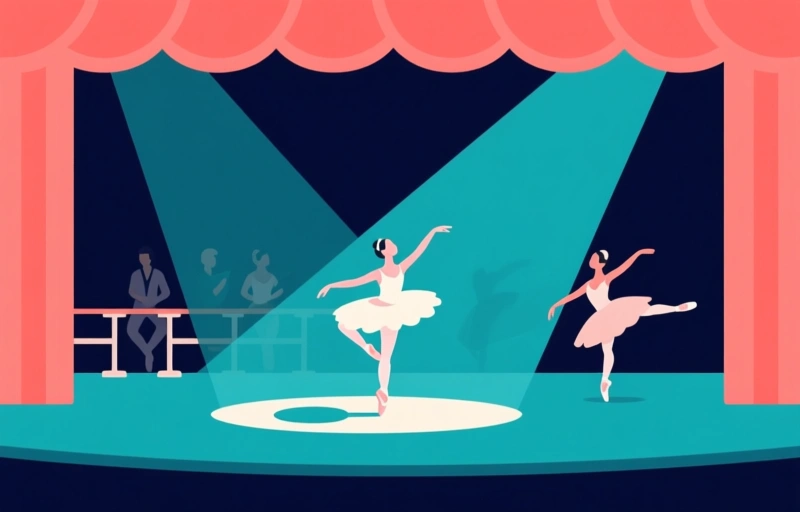
Discover how ballet transforms Shakespeare's timeless stories into breathtaking movement, and learn practical tips for dance professionals looking to stage their own adaptations.
There's something magical about watching a story told without a single word. Ballet does exactly that, and when the source material is Shakespeare, the result is pure poetry in motion.
Shakespeare's plays are already packed with drama, emotion, and larger-than-life characters. But when you strip away the dialogue and let dancers communicate through movement alone, something extraordinary happens. The stories become more universal, more visceral, and somehow even more human.
### Why Ballet and Shakespeare Are a Perfect Match
Both ballet and Shakespeare rely on heightened emotion and physical expression. In a ballet adaptation, every leap, every turn, every trembling hand carries meaning. The choreographer becomes the translator, turning iambic pentameter into arabesques and pirouettes.
Think about it: Romeo and Juliet's balcony scene doesn't need words when you can see the longing in a dancer's reach. Hamlet's madness becomes a series of jerky, unpredictable movements. The witches in Macbeth transform into sharp, angular choreography that sends chills down your spine.
### How Choreographers Approach the Bard
For dance choreographers, adapting Shakespeare is both a challenge and a gift. You're working with some of the greatest stories ever told, but you can't rely on language to carry the plot. Instead, you have to distill each scene down to its emotional core.
Here are a few ways choreographers make it work:
- **Focus on key moments** - Instead of trying to tell the entire play, they pick the most powerful scenes and let those carry the story.
- **Use music to set the tone** - The score becomes the narrator, guiding audiences through shifts in mood and intention.
- **Simplify the plot** - Complex subplots often get trimmed so the main emotional arc remains clear.
- **Lean into physicality** - Every gesture matters. A turned back can mean rejection; a lifted arm can mean hope.
### The Financial Side of Ballet Productions
Putting on a ballet, especially one with elaborate sets and costumes for a Shakespeare adaptation, isn't cheap. A single production can easily run into the hundreds of thousands of dollars. Ticket sales typically cover only about 40 to 50 percent of the cost, so dance studios and companies rely heavily on grants, donations, and sponsorships.
For a mid-sized dance studio looking to stage something like "The Winter's Tale" or "A Midsummer Night's Dream," you're looking at costs ranging from $50,000 to $150,000 for a full production. That includes costumes, set design, musician fees, and rehearsal space rentals.
### Why This Matters for Dance Professionals
If you're a dance choreographer or run a dance studio, understanding how to adapt classic literature can open up new creative and financial opportunities. Schools and community theaters often look for unique productions that stand out. A Shakespeare ballet can attract audiences who might not normally attend a dance performance.
> "Dance is the hidden language of the soul." - Martha Graham
That quote captures why ballet and Shakespeare work so well together. Both art forms speak directly to something deep inside us, bypassing the intellect and hitting the heart.
### Practical Tips for Your Own Adaptation
Thinking about staging your own Shakespeare-inspired ballet? Start small. Pick a single act or even just a famous scene. "The Tempest" has incredible potential for magical, fluid movement. "Macbeth" offers dark, dramatic possibilities. And "Romeo and Juliet" is practically begging to be danced.
Work closely with your costume designer to create pieces that move well on stage. Shakespeare's characters often wear elaborate clothing, but dancers need freedom of movement. Find that balance.
And don't forget the music. Whether you go with a classical score or something modern, the music is what will tie everything together. It's the invisible partner in every pas de deux.
### Final Thoughts
Ballet and Shakespeare are two art forms that have stood the test of time. When you bring them together, you create something that feels both timeless and fresh. For dance professionals, exploring these adaptations isn't just about honoring tradition. It's about pushing your craft forward and connecting with audiences in a way that words alone never could.
So next time you're looking for inspiration, crack open a Shakespeare play. You might just find your next great performance waiting between the lines.