How Ancient Roman Sites Inspire Modern Dance Choreography
Julia Wagner ·
Listen to this article~5 min
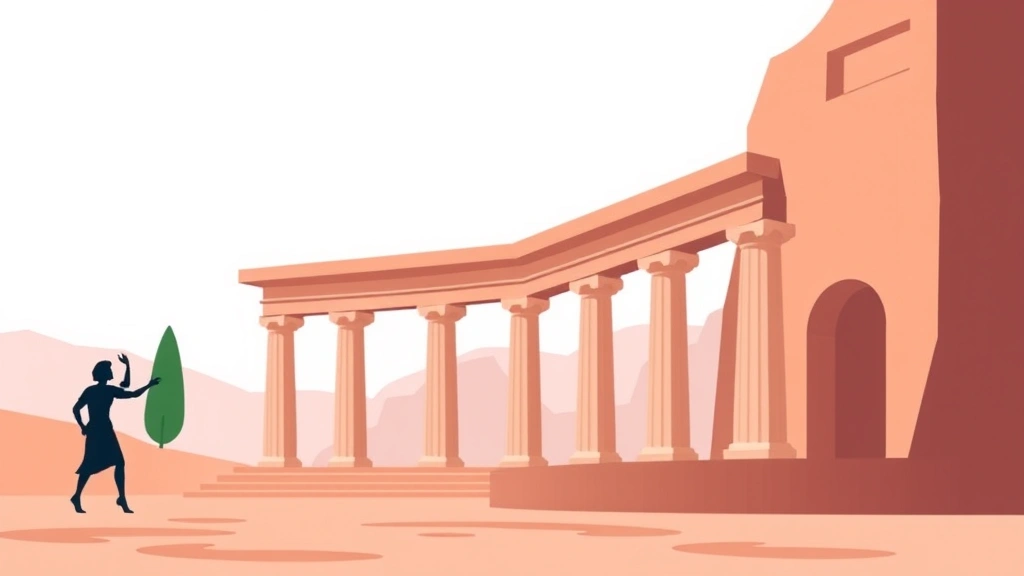
Discover how a dance company transformed inspiration from ancient Roman ruins into breathtaking choreography. Learn practical ways to draw creative energy from historical sites for your own studio or company.
You know that feeling when you walk through an ancient place and the air just feels different? The stones seem to whisper stories. That's exactly what happened to a dance company recently when they visited a Roman archaeological site in Northumberland, England. The experience didn't just give them chills—it gave them their next big production.
As a UX/UI designer who works with creative professionals, I see this all the time. Inspiration doesn't just come from within the studio walls. Sometimes, you need to step outside and let history move you.
### Finding Movement in Ancient Stones
What's fascinating about this story isn't just that dancers visited an old site. It's how they translated that experience into movement. Think about it—Roman architecture has rhythm. The columns create vertical lines. The ruins suggest broken, interrupted flows. The spaces between structures become negative space, just like the pauses between dance steps.
These dancers walked through corridors that were built nearly 2,000 years ago. They touched stones that Roman soldiers once walked past. And they asked themselves: What stories could these walls tell if they could dance?
### The Creative Process Behind Historical Inspiration
When creative professionals draw from historical sites, they're not just copying what they see. They're interpreting it through their own artistic lens. Here's what that process often looks like:
- **Sensory immersion**: Spending hours at the site, absorbing sounds, textures, and spatial relationships
- **Historical research**: Understanding the people who lived there and their daily movements
- **Movement experimentation**: Trying physical responses to the environment
- **Collaborative development**: Building choreography that reflects both history and contemporary expression
One dancer described it as "feeling the ghosts of movement" in the empty spaces. Another talked about how the uneven ground suggested asymmetrical patterns they'd never considered before.
### Why This Matters for Dance Studios Today
Here's the thing—you don't need to fly to England to find this kind of inspiration. Every community has its own historical sites. That old factory downtown? The preserved Victorian neighborhood? The Native American burial grounds marked with interpretive signs?
These places hold movement memories. As dance professionals, we can learn to read them.
> "History doesn't just live in books—it lives in the spaces between things. Our job as artists is to give those spaces a voice through movement."
### Practical Applications for Your Studio
So how can you bring this approach into your own work? Start small. Take your advanced students on a field trip to a local historical site. Give them these simple prompts:
- How does this space make your body want to move?
- What patterns do you see in the architecture that could become dance patterns?
- If the people who lived here were telling their story through dance, what would that look like?
You might be surprised at what emerges. One studio I worked with visited a 19th-century mill and created an entire piece about industrial revolution workers. The mechanical rhythms of the old machinery inspired staccato, precise movements. The worn wooden floors suggested sliding, grinding motions.
### Building Community Through Shared History
Here's another benefit: When you create work inspired by local history, you're not just making art. You're connecting with your community in a deeper way. Local historical societies often love collaborating with artists. Museums might offer space for performances. Schools can integrate your work into their history curriculum.
That dance company in Northumberland? Their Roman-inspired piece became a community event. People who'd never been to a dance performance came because they were curious about how artists would interpret a site they knew well.
### The Takeaway for Creative Professionals
Inspiration is everywhere if we know how to look. As dance studio owners, choreographers, and teachers, our job isn't just to teach technique. It's to teach our students how to see the world as full of potential movement.
Those Roman ruins in England are about 4,000 miles from most American studios. But the principle travels well. Look around your own community. What historical sites have you driven past without really seeing? What stories are waiting to be told through dance?
Your next great piece might be waiting in the most unexpected place. Sometimes, you just need to step outside the studio and listen to what the past has to say about movement.