Ancient Dance, Modern Stories: Women Reimagining Tradition
Julia Wagner ·
Listen to this article~4 min
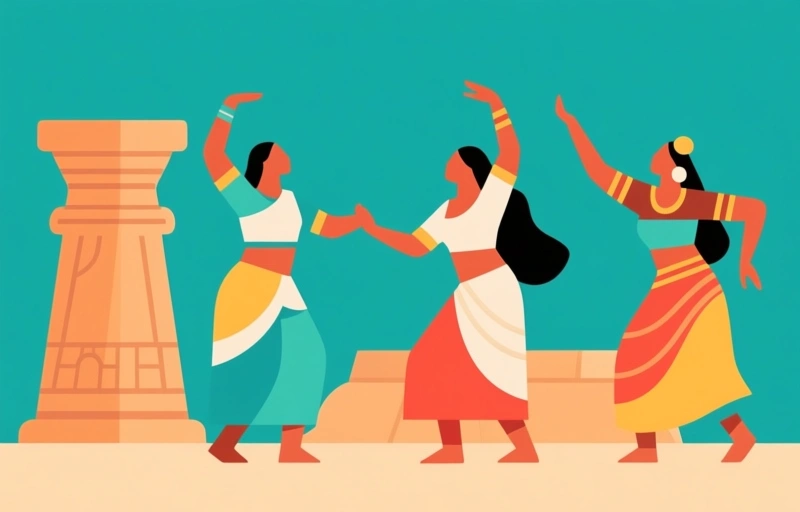
A new generation of women choreographers is revitalizing ancient dance forms, using traditional movements to tell powerful, contemporary stories about modern life, identity, and social issues.
Have you ever watched a dance and felt like you were glimpsing into another century? That's the power of ancient dance forms—they carry the whispers of generations. But here's the thing: tradition doesn't have to live in a museum. Right now, a wave of innovative women choreographers is doing something remarkable. They're taking these time-honored movements and using them to tell stories that speak directly to our modern lives.
It's not about discarding the old. It's about having a conversation with it. These artists treat ancient dance as a living language, one they can use to discuss everything from climate anxiety to digital loneliness. The steps might be centuries old, but the heart behind them beats with today's rhythm.
### Why Ancient Forms Resonate Now
In a world that moves at breakneck speed, there's a deep craving for connection to something enduring. Ancient dance provides that anchor. The physical techniques—whether it's the precise mudras of Indian classical dance or the grounded, earthy movements of West African forms—offer a tangible link to history. They're a form of embodied knowledge.
But the real magic happens when that knowledge gets a new context. Imagine a Bharatanatyam piece that explores social media identity, or a Flamenco performance that channels the frustration of political injustice. The contrast between the old form and the new message creates a powerful tension. It makes us see both the dance and our own world in a completely new light.
- **Cultural Reclamation:** For many, it's an act of reclaiming and redefining their own heritage on their own terms.
- **Emotional Depth:** The rigorous discipline of traditional forms allows for incredibly nuanced emotional expression.
- **Physical Storytelling:** These dances were designed to communicate complex narratives long before we had film or novels.

### The Choreographer's Toolkit: Blending Old and New
So how do you actually blend a 500-year-old art form with a 21st-century story? It starts with deep respect. These choreographers often spend years, sometimes decades, mastering the traditional form first. They learn the rules inside and out—the proper posture, the symbolic gestures, the rhythmic structures.
Only then do they feel empowered to play. They might keep the foundational footwork but change the arm movements to suggest something new. They might use the traditional costume but pair it with a stark, modern set design. The music could be a fusion of classical instruments and electronic soundscapes. One choreographer I spoke with put it perfectly:
> "I'm not breaking the rules. I'm just having a long, thoughtful conversation with them. Sometimes we agree, sometimes we argue, but the dialogue itself creates the art."
This approach requires incredible sensitivity. It's a tightrope walk between innovation and preservation, and these artists navigate it with grace. They understand that to make the old relevant, you have to meet your audience where they are.

### What This Means for Your Studio or Practice
If you're running a studio or teaching classes, there's a huge opportunity here. Students today are looking for more than just technique; they want meaning. They want to understand how their movement connects to a bigger picture. Introducing the concept of storytelling through traditional forms can be incredibly engaging.
Consider offering a workshop series that focuses on the "why" behind the steps. Explore how a single gesture can be reinterpreted. Challenge your advanced students to create a short piece using a traditional form to tell a personal, modern story. You might be surprised by what they create.
This movement reminds us that art is never static. It breathes, evolves, and responds to the world around it. By honoring the past while speaking to the present, these women aren't just preserving dance history—they're actively writing its next chapter. And that's a story worth watching unfold.