Ancient Dance, Modern Stories: Women Reimagining Tradition
Julia Wagner ·
Listen to this article~5 min
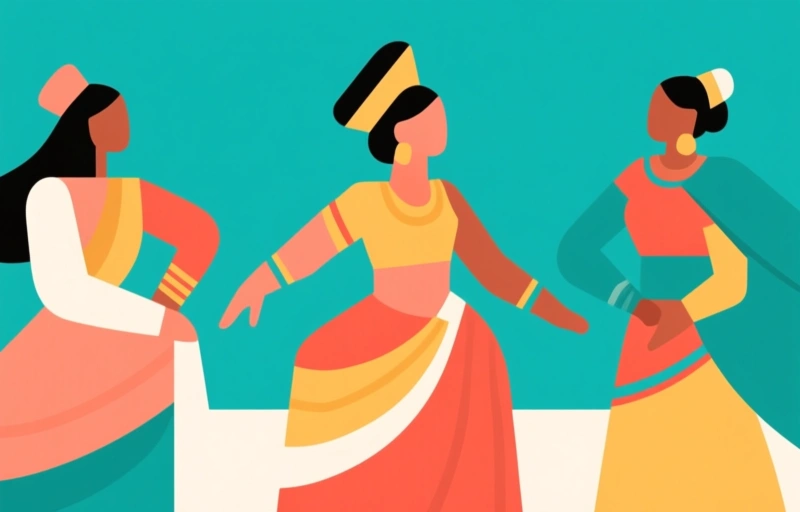
Women choreographers are revitalizing ancient dance forms to tell contemporary stories. This fusion movement creates powerful dialogues between past and present, offering fresh inspiration for studios and modern audiences.
Have you ever watched a dance and felt like you were witnessing something timeless? Something that connects you to stories told centuries ago, yet feels completely relevant to today? That's exactly what's happening in studios and theaters across the country right now. A movement of women choreographers is breathing new life into ancient dance forms, using them to tell contemporary stories that resonate with modern audiences.
It's not about preserving tradition in a museum case. It's about taking those beautiful, foundational movements and asking: what do they have to say to us now? How can a classical Indian *mudra* (hand gesture) express the anxiety of social media? How can the fluid lines of traditional Cambodian dance articulate the journey of an immigrant family? These artists are finding the answers, and the results are breathtaking.
### Why Ancient Forms Are Perfect for Modern Narratives
You might wonder why these choreographers don't just create something entirely new. The beauty lies in the contrast and the connection. Ancient dance forms come with a built-in vocabulary—a set of postures, rhythms, and symbolic gestures that have been refined over generations. They carry the weight of history. When you layer a 21st-century story onto that framework, it creates a powerful dialogue between past and present. The old form gives depth to the new story, and the new story reveals fresh dimensions in the old form.
Think of it like restoring a historic building for a new purpose. You keep the original architecture—the beautiful bones—but you rewire it for modern life. The structure gains new relevance while honoring its origins. That's what these artists are doing with movement. They're respecting the technique while fearlessly expanding its emotional and narrative range.
### The Tools of Transformation: How They're Doing It
So, how does this transformation actually work in the studio? It starts with deep, respectful study. These women often spend years mastering the traditional form before they feel equipped to innovate. Then, the experimentation begins. They might:
- **Fuse techniques:** Blending the precise footwork of Flamenco with the improvisational freedom of contemporary dance.
- **Recontextualize gestures:** Using a symbolic gesture from West African dance to represent a modern concept like digital connectivity or climate grief.
- **Alter the rhythm:** Speeding up or fragmenting the traditional tempo to mirror the pace of urban life.
- **Change the setting:** Performing a traditionally temple-based Southeast Asian dance in a stark, minimalist studio to highlight its raw emotional power.
The goal is never to mock or dilute the original. It's a labor of love—an act of keeping the form alive by letting it speak in today's language.
As one choreographer I spoke with put it: *'Tradition isn't a cage. It's a springboard. My grandmother's dances gave me a language. My job is to write new poetry with it.'*
This quote really captures the heart of the movement. It's about lineage and legacy, but also about personal voice and urgent, current expression.
### The Impact on Students and Studios
For dance studio owners and teachers, this trend offers incredible opportunities. Students, especially young adults, are hungry for work that feels meaningful and connected to the wider world. Offering classes or workshops that explore these fusion concepts can be hugely engaging. It teaches technical discipline through the traditional form while empowering students to find their own creative voice within it.
Imagine a class project where students learn a basic traditional sequence, then work in small groups to adapt it to tell a story from their own lives. The technical learning sticks because it's applied creatively. The studio becomes a lab for cultural conversation and personal storytelling. It moves beyond mere replication into the realm of co-creation.
This approach also builds incredible community. It attracts diverse students interested in cultural history, contemporary performance, and social storytelling. It positions your studio as a forward-thinking, culturally responsive space. And frankly, it's just more fun to teach when you're exploring new ground alongside your students.
The movement of women reimagining ancient dance is more than a performance trend. It's a reminder that art is a living, breathing conversation. Our oldest traditions don't have to stay in the past. In the hands of thoughtful, courageous artists, they can become the most vibrant way to tell the stories of right now. For anyone running a studio, teaching a class, or crafting a piece, that's an inspiring thought to take into the studio tomorrow. The past has given us a magnificent toolkit. It's up to us to build something new with it.